Showing posts with label Great Commandment. Show all posts

March 24, 2019

The Divine Basis of the Great Commandment

One of them, an expert in the law, tested him with this question: “Teacher, which is the greatest commandment in the Law?” Jesus replied: “‘Love the Lord your God with all your heart and with all your soul and with all your mind.’ This is the first and greatest commandment. And the second is like it: ‘Love your neighbor as yourself.’ All the Law and the Prophets hang on these two commandments.”
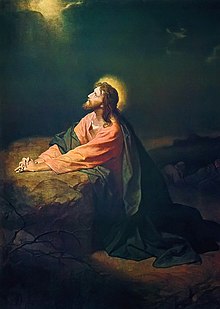
The essential Christian ethic is love. The commands such as "Do not murder", "Do not bear false witness", and the like are by virtue of this essential principle.
Let no debt remain outstanding, except the continuing debt to love one another, for whoever loves others has fulfilled the law. The commandments, “You shall not commit adultery,” “You shall not murder,” “You shall not steal,” “You shall not covet,” and whatever other command there may be, are summed up in this one command: “Love your neighbor as yourself.” Love does no harm to a neighbor. Therefore love is the fulfillment of the law. (Romans 13:8-10)
So, while particulars such as "Do not murder", "Do not steal", etc do not apply to God (who is One and there is no other distinct god(s) to kill or steal from), the universal essential principle of love must find its basis in Him; otherwise, it becomes invalid and non-essential. The Scriptures, however, makes it quite obvious that the Triune God is the supreme foundation of the Great Commandment.

While one may not find a big issue in God's exemplification of the second command to love one's neighbor as oneself (Jesus incarnated as flesh and blood and became our Good Samaritan), one can also clearly see in the Scripture that the Triune God exemplifies the first command to "Love the Lord your God with all your heart..."

One may ask, "How can that be possible, since there is no God above God? How can God love God will all His heart...?" The answer is that Jesus did refer to the Father as "My God", as in "My God and My God, why have You forsaken Me?" (Matthew 27:46). Similarly, the Father refers to the Son as God when He says, "Your throne, O God, will last for ever and ever; a scepter of justice will be the scepter of your kingdom." (Hebrews 1:8).

Similar verses that affirm love within the divine community fill the pages of the Gospels.

September 28, 2014

Great Commandment in Apposition to the Great Commission

The Good Samaritan (Wikimedia)

Citations:

The Great Commandment is the essential law of the church; the Great Commission is the missional task of the church. The both cannot be confused. To love is a rule and principle that would never cease to be; to preach is an obligation that will soon cease to be. That is one reason why caring for the poor, the orphans, and the widows is considered to be pure religion (James 1:27). The liberational causes and the cause of justice and mercy are principle causes – things that the church cannot silently ignore when it has the power not to ignore. To love one’s neighbor as oneself is an essential obligation. In most cases, one may not preach but still be a Christian, and draw others through a silent conformity to the essential Christian principle of love (1Peter 3:1). Being precedes manifestation.

The ethical rule must not be confused with the ecclesiastical task. To love is not a task; it is an essential principle. Jesus said that His disciples will be known by the love they have for one another (John 13:35). To love is not a mission that Jesus has committed to the church – to take care of the poor, orphans, and widows was a moral obligation required even in the Old Testament....

The ecclesiastical task must flow out of the essential ethic. Love is the motive of evangelism; evangelism is not the motive of love. The messenger cannot shirk off his essential obligation to love and merely preach the Gospel for the sake of a job to be done. Jesus considered the caring responses of the Good Samaritan as more important than the temple services of the Levite and the priest. The essential obligation to love was more important than even the ecclesiastical office. In essence, one evangelizes because and out of love; one doesn’t love in order to evangelize. Therefore, social service with the aim of evangelization is hypocrisy. However, where evangelism exists, social service is bound to co-exist.

To posit the principle of operation as the goal of the operation is a confusion of identity. Love is the principle of which evangelization is only a time-bound goal – though covering eternity. Certainly, there are also things other than evangelization that the principle of love, commanded under the new covenant, covers. However, evangelization is core outreaching of the principle of love, for it aims at an everlasting result – the salvation of persons. As such it is the essential concern of being (against death for life) in opposition to the temporal concerns of the secular. Evangelization answers the ultimate existential concern of being-towards-life.

The task only exists because the law of being is violated. Mission exists because love is confused. Therefore, reconciliation is the prime goal. Spiritual reconciliation is lame where the pictures of equality, equity, compassion, and justice are not concretely visible. The mission lies lame because the law of being remains violated (both vertically towards God and horizontally towards fellow humans). Love towards God is the attitude and act of glorifying God; it follows love of one’s neighbor (brother and sister) as oneself (1John 4:20-21).
--Marbaniang, ("Globalization and Gospelization", Paper presented at Mission Consultation, Pune, January 2014.)

There is...no better time to explore the relationship between making disciples and living as disciples in the world, or the Great Commission and the Great Commandment....

At their simplest levels, the Great Command-ment and the Great Commission follow the distinction between law and gospel. A young lawyer asked Jesus, "Teacher, which is the great commandment in the Law?" Jesus replied, "You shall love the Lord your God with all your heart and with all your soul and with all your mind. This is the great and first commandment. And a second is like it: You shall love your neighbor as yourself. On these two commandments depend all the Law and the Prophets" (Matt. 22:36-40). Jesus was simply repeating Moses (Lev. 19:18; Deut. 6:5). The second is like the first not only because it summarizes the second table of the law (love for neighbor), but because love for God is inextricable from love of fellow image-bearers.

Of course, the Great Commission is also a command, but it differs from the Great Commandment in several ways. First, they differ in their subjects. The Great Commandment is given to all people in every time and place, while the Great Commission is given to the church alone. Second, they differ in their mandate. The Great Commandment calls all people to love God and neighbor, while the Great Commission calls the church to make disciples of Christ. Third, they differ in their methods. The Great Commandment is natural, inscribed on the human conscience in creation as part of the image of God, and these natural precepts are codified and enforced by social institutions (the family, various voluntary associations, and the state). The gospel, however, is not something that all people know inwardly and innately; it's a surprising announcement that must be proclaimed....

Collapsing the gospel into the law and the Great Commission into the Great Commandment, many Christians today speak of our "living the gospel," even "being the gospel," with gratuitous appeals to participate with God in his redeeming and reconciling activity through their good works. However, this rhetoric is in danger of advancing another gospel, which is no gospel but rather the summary of the law....

Paradoxically, it is only when the church is doing something other than engaging in social justice missions that it actually shapes members "to do justice, and to love kindness, and to walk humbly with [their] God" (Mic. 6:8).
...................................................
Distinction without Separation
The Cultural Mandate

Key Verse: Genesis 1:28: "And God blessed them. And God said to them, 'Be fruitful and multiply and fill the earth and subdue it and have dominion over the fish of the sea and over the birds of the heavens and over every living thing that moves on the earth."
Activities: Family, Culture-Making and Renewal, Art, Music, Commerce, Politics
The Great Commandment
Key Verse: Matthew 22:37-40: "And he said to him, 'You shall love the Lord your God with all your heart and with all your soul and with all your mind. This is the great and first commandment. And a second is like it: You shall love your neighbor as yourself. On these two commandments depend all the Law and the Prophets."
Activities: Hospitality, Visiting the Sick, Feeding the Poor, Caring for the Needy
The Great Commission
Key Verse: Matthew 28:19-20: "Go therefore and make disciples of all nations, baptizing them in the name of the Father, Son, and Holy Spirit and teaching them to observe all that I have commanded you. And behold, I am with you always, to the end of the age."
Activities: Preaching, Word and Sacrament Ministry, Discipline, Discipleship, Catechesis
...................................................
--Michael S. Horton (Justification and Justice: The Great Commission and the Great Commandment, Modern Reformation, Issue: "Social Justice: Social Gospel?" Sept./Oct. 2011 Vol. 20 No. 5 Page number(s): 14-19, 26. Accessed Sept 29, 2014). Michael Horton is the J. Gresham Machen professor of apologetics and systematic theology at Westminster Seminary California (Escondido, California)

Our criticism of Transformation Theology is not directed against its call to the social responsibility of Missions. We are in no way against works of love, but well against the massive shift of priority from preaching to social responsibility; for by this the Gospel threatens to become an ideological programme. We grant the theologians of Transformation their justified concern that conversion, change of mind and discipleship should have social, ethical and structural consequences. But we oppose their projected impression that man is the “maker” of the kingdom of God and that his salvation would be, as it were, made manifest only through his deeds. This would amount to a new “salvation by works”.

...Today, evangelical missions are in the same danger if they embrace programmes which are called “holistic”, “incarnatory” or, as mentioned already, “transforming” mission. Here the concerns for the physical and social well-being of man threaten to outshine eternal salvation.
--("World Evangelization or World Transformation?", International Christian Network, Tübingen, Pentecost 2013)