Showing posts with label Scripture Jots. Show all posts

May 28, 2021

Jesus ate fish (post-resurrection) - Implications

 Luk 24:42-43 “They gave him a piece of broiled fish, and he took it and ate it in their presence.” (NIV)

Firstly, food was not sustenance to Him. He was immortal and eternal.

Secondly, resurrection did not mean He could not eat meat (here, fish)

Thirdly, He ate to provide proof of His resurrection.


December 29, 2019

Sons of God

"the earnest expectation of the creation eagerly waits for the revealing of the sons of God." Rom.4:19

~ Human government with its rules and regulations symbolizes humanity in a toddler age [quite freaky when govt attempts to act like a parent]. When the "sons" come to age, they do not live by the letter of the law but by the spirit. Children need codes of conduct, "sons" do not. "For as many as are led by the Spirit of God, they are the sons of God." (8:14)

July 15, 2019

The Tragedy of a Lured Prophet (1 Kings 13)

1 KINGS 13 gives us the narrative of a prophet whose prophecies were accompanied by signs and wonders.

However, he was lured by another old prophet into doing what was forbidden to him. He was forbidden to eat and drink in that place. But, the old prophet said that the Lord had told him to feed him. The narrative describes the ensuing events that unraveled the error of the prophet lured by lies and his subsequent tragic death by a lion. The lion didn't eat him nor hurt his donkey. Interestingly, the old prophet who lured this young prophet seems to go unpunished. On the other hand, he wisely observes that the young prophet's prophecies will come true and instructs his sons to bury him when he dies along with the young prophet. Subsequently, when the prophecies did come true, and Josiah was turning over the tombs in Bethel, the old prophet's body was honorably left because it was placed together with the young prophet's body in his tomb. Seems shocking.

But, the young prophet erred grievously. He had a two-fold word from the Lord and it was accompanied by two signs. The two-fold word constituted a prophecy related to the false altar worship practiced at Bethel and secondly, the command to the prophet not to eat at Bethel. Both words were equally immutable. God's word has plenary truth-value. The young prophet allowed an inconsistency factor into his system of faith by allowing the old prophet's lie to turn him from the divine command. But, God's word is not inconsistent. If the prophet would not be punished for violating God's command privileged to him, so may not Bethel be punished according to his prophecy against its false worship and violation of God's written command to the people of Israel. However, for whatever reason (open to speculation) he chose to believe the antithetical privileged testimony of the old prophet (a lie) and suffered the consequences for his turning away from faith.

If he himself didn't believe God's command to him, why should people believe in the prophecy concerning them? The teacher and preacher of the word is doubly accountable.

March 26, 2019

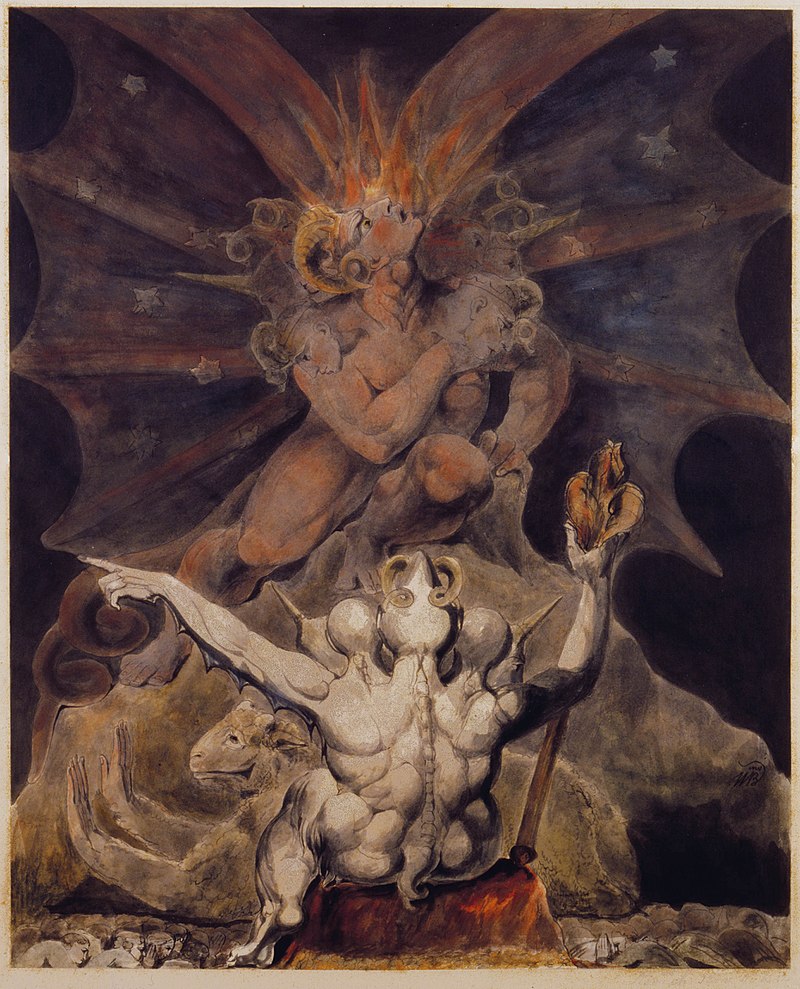
The Image of the Beast that Will Come to Life (Revelation 13)

And he had power to give life unto the image of the beast, that the image of the beast should both speak, and cause that as many as would not worship the image of the beast should be killed. (Rev 13:15)
One advantage of prophecy is that it can be verified in history. While the Genesis account of creation is disputed by many in the scientific community (with some theologians attempting to demythologize it), prophecy resists such attempts. Thus, the strongest of evidences for the Messiahship of Jesus did not come from science [it could not] nor from the miracles He did, but from the fulfillment of Old Testament prophecies regarding Him. However, the sheer irony of all this is that while prophecy helps to unfold the meaning of events to the believer, the prophecy itself includes a clause regarding disbelief in the same (which also needs to be fulfilled). Thus, while many disciples were able to see the Messianic prophecies as fulfilled in Jesus, there were many others who could not see this, thus fulfilling the prophecy (though volitionally rejecting it) that they would despise and reject the Messiah.

A similar situation is predicted in the book of Revelation. When the anti-Messiah (the beast) will appear, prophecies will become historically verifiable, which would actually mean that this verification can serve as an apologetic tool for faith. However, the prophecy tells us that instead of believing in God, people would increasingly turn away from God. In other words, the prophecy includes a clause that makes disbelief in it the verification of it. When people would increasingly turn away from God, this would prove that the prophecy was true. But, if it is so, then the prophecy cannot function as an apologetic aid for those who will to turn away from God.

The biggest problem of evolutionism is the issue of how life can originate from a mere collocation of atoms, even if those atoms were (by chance) placed in the right sequence. The either-DNA-or-protein-first problem continues to haunt evolutionists though there are hypotheses that this is resolved by the RNA world hypothesis. Yet, that hypothesis is also not problem-free. It seems that a phenomenon of some kind of genius giving "life unto the image" can be a staggering event for humanity. To the intellectuals, it could suggest a very advanced level of scientific achievement that an image (a rightly sequenced pattern) could not only come to life but also be able to communicate and make intelligent decisions. Probably, this would not be at a level of the much theorized battery powered AI robots (breath of life is not the same as battery-run).

Yet, this would only lead more to the worship of the beast, rather than worship of the living God. No wonder, elevation of the beast, as having originated from the beast, is characteristic of idolatrous worship.

Rom 1:23  And changed the glory of the uncorruptible God into an image made like to corruptible man, and to birds, and fourfooted beasts, and creeping things.
Rom 1:25  Who changed the truth of God into a lie, and worshipped and served the creature more than the Creator, who is blessed for ever. Amen. 
The idea of "beast" being used for humans is a reduction that signifies a corruption of the divine image. Without God in the picture, man is not much different from the beasts
I said in mine heart concerning the estate of the sons of men, that God might manifest them, and that they might see that they themselves are beasts. For that which befalleth the sons of men befalleth beasts; even one thing befalleth them: as the one dieth, so dieth the other; yea, they have all one breath; so that a man hath no preeminence above a beast: for all is vanity. All go unto one place; all are of the dust, and all turn to dust again. Who knoweth the spirit of man that goeth upward, and the spirit of the beast that goeth downward to the earth? (Ecc 3:18-21, emphatics mine)
The modern rebel that Chesterton referred to, at least, had some moral sense of not being a beast though scientifically affiliating with beasthood: "The man of this school goes first to a political meeting, where he complains that savages are treated as if they were beasts; then he takes his hat and umbrella and goes on to a scientific meeting, where he proves that they practically are beasts."

But, the forthcoming beast-worshiper will be morally dissolute as well.

Rom 1:24  Wherefore God also gave them up to uncleanness through the lusts of their own hearts, to dishonour their own bodies between themselves:
Rom 1:26  For this cause God gave them up unto vile affections: for even their women did change the natural use into that which is against nature:
Rom 1:27  And likewise also the men, leaving the natural use of the woman, burned in their lust one toward another; men with men working that which is unseemly, and receiving in themselves that recompence of their error which was meet.
Rom 1:28  And even as they did not like to retain God in their knowledge, God gave them over to a reprobate mind, to do those things which are not convenient;
Rom 1:29  Being filled with all unrighteousness, fornication, wickedness, covetousness, maliciousness; full of envy, murder, debate, deceit, malignity; whisperers,
Rom 1:30  Backbiters, haters of God, despiteful, proud, boasters, inventors of evil things, disobedient to parents,
Rom 1:31  Without understanding, covenantbreakers, without natural affection, implacable, unmerciful:
Rom 1:32  Who knowing the judgment of God, that they which commit such things are worthy of death, not only do the same, but have pleasure in them that do them.

Rev 16:9  And men were scorched with great heat, and blasphemed the name of God, which hath power over these plagues: and they repented not to give him glory.
Rev 16:10  And the fifth angel poured out his vial upon the seat of the beast; and his kingdom was full of darkness; and they gnawed their tongues for pain,
Rev 16:11  And blasphemed the God of heaven because of their pains and their sores, and repented not of their deeds.
Rev 16:12  And the sixth angel poured out his vial upon the great river Euphrates; and the water thereof was dried up, that the way of the kings of the east might be prepared.
Rev 16:13  And I saw three unclean spirits like frogs come out of the mouth of the dragon, and out of the mouth of the beast, and out of the mouth of the false prophet.
Rev 16:14  For they are the spirits of devils, working miracles, which go forth unto the kings of the earth and of the whole world, to gather them to the battle of that great day of God Almighty. 

August 14, 2018

Eccl 12:11 All truth is God's truth

The words of the wise are like goads, their collected sayings like firmly embedded nails—given by one shepherd. (Eccl 12:11)
~All truth is God's truth. Truth always sets free. Truth is consistent and coherent. Truth is not bound to any religion or culture, it is above all of them. Truth is one. It is like the sun that shines over all. The True Shepherd guides us into truth.

August 05, 2018

Ecclesiastes 12:7- The Spirit

Then shall the dust return to the earth as it was: and the spirit shall return unto God who gave it. Eccl.12:7

All throughout the book, the preacher reminds us that everything is ephemeral, transitory, and vanishing like a vapor. However, towards the end of the book, at the point where he describes how the strong human gets weaker, ultimately falling to the ground, he mentions that there is one part of man that isn't a vapor after all: the spirit of man.

It is certainly foolish to ignore the spirit and focus all attention on things that are intrinsically vaporish and perishing. Jesus asked what would it profit if a man gained the whole world but lost his on soul. Nothing.

Therefore, we are reminded to remember our creator in the days of our youth.
..

August 11, 2017

One Thing Is Needed (Lk.10:41-42)


And Jesus answered and said to her, "Martha, Martha, you are worried and troubled about many things. But one thing is needed, and Mary has chosen that good part, which will not be taken away from her." (Lk 10:41-42 NKJ)

Chores and cares occupy much of our lifetime. Sometimes, we begin to wonder if time cannot be stretched a bit more longer as the day was stretched for Joshua. As night draws in and another day comes to an end, we wish we could have done a bit much more, especially a bit much more for our Lord. But, what does our Lord say? "Martha, Martha, you are worried and troubled about many things. But one thing is needed, and Mary has chosen that good part, which will not be taken away from her."

He cares more for us to be at His feet and learn from Him than to think that we must be out somewhere doing things for Him. Does it mean that we need to be doing nothing? Of course not. But, it certainly means that we need to learn to sit and learn at His feet even when we are doing something.

Our worth doesn't come from our working for Him. Our worth comes from our being with Him. Satisfaction in life does not come from incessant working or acting. Satisfaction comes from our relationship with Him, when He reigns as the Master in our heart and gets all our reverential attention. Jesus made this clear to the Ephesians:
"I know your works, your labor, your patience...and you have persevered and have patience, and have labored for My name's sake and have not become weary. Nevertheless I have this against you, that you have left your first love. (Rev 2:2-4 NKJ)

The saddest part of a Christian's walk will be when he gets so busy working for God that he fails to understand he has actually really stopped serving Him; that he has actually grown distant from Him. In order to serve the Master, one must be sensitive to His voice, to His call, to His command. But, how can one hear when the mind is worried and troubled about many things?

May our hearts learn to rest in His presence and be attentive to His voice even in the midst of the most intensive and perspiring labor; that we don't find worth in work, but find worth in worshiping the Lord and Master of all things!

July 11, 2017

Personal and Mass Evangelism


"Cast in a hook, and take the fish.." (Mat.17:27)
"Cast the net.. and you will find some." (Joh 21:6)

Personal evangelism is like fishing with a hook. Mass evangelism is like fishing with a net. But, it's more important to drag the net to the shore and bring the fish home.

Both require focus, accuracy (guidance), and patience. Both involve the idea of catching and being catchy. Evangelism fishes souls out of the sea of sin and damnation and draws them out into salvation. The fish hook/net is the message of the Gospel that saves them.

Both are inefficient without the command and guidance of Christ the Master Fisherman. He knows where and when and how to do it.

The bait is something they want and look for. The consequence is their redemption.

Satan also uses snares, nets, and hooks to hunt after souls. The saved are instructed to be vigilant and prayefully watch so that they do not get ensnared by the devil.

January 11, 2017

The Lord Knows the Way of the Righteous

"Nor stands in the path of sinners...
For the LORD knows the way of the righteous, but the way of the ungodly shall perish. " (Psalm 1:1,6)
The term "way" in the Bible is always linked to a destination or destiny. To wander from the right way and be lost may invite compassion; but, to choose the wrong way and persist on it invites divine wrath.
Woe to them! For they have gone in the way of Cain, have run greedily in the error of Balaam for profit, and perished in the rebellion of Korah (Jude 1:11)
But, the LORD knows the way of the righteous.
Nevertheless the solid foundation of God stands, having this seal: "The Lord knows those who are His," and, "Let everyone who names the name of Christ depart from iniquity." (2Tim. 2:19)

November 21, 2016

The Rewards of Risk-Taking (Eccl. 11:1-6)


"Cast your bread upon the waters, for after many days you will find it again." (Ecc 11:1)

One should not fear taking risks. All work of production calculates risks. Risk-taking is key to farming, business, banking. In the Parable of Talents, the boss commended the two workers who went and took risks to do business with the money they received, doubling it by the time their boss returned. However, he was very unhappy with the worker who went and hid the capital depriving the boss of even the interest from the use of it. He rebuked him saying that he should have given the money to bankers if he was afraid of taking risks, for bankers (risk-takers themselves) assure of a set interest amount. Risk-taking must be accompanied by good counsel, calculation, wisdom, and diligent hard-work that explores various avenues of investment. Risk-taking investments forgo the present disuse or use of something for sake of future returns. For instance, the farmer sows the grain instead of eating it or storing it for consumption in order to reap multiple production.

Instead of investing the whole capital in just one industry, it is better to divide it into various. "Give portions to seven, yes to eight, for you do not know what disaster may come upon the land." (Ecc 11:2)

It is also important to be diligent and willing to use spare time (available labor-time--not to scrape it from family and rest time) in any other industry. "Sow your seed in the morning, and at evening let not your hands be idle, for you do not know which will succeed, whether this or that, or whether both will do equally well."(Ecc 11:6)

Don't just wait for things to look very sure and certain. Move forward. Risk-takers move by faith, not by sight. "Whoever watches the wind will not plant; whoever looks at the clouds will not reap (Ecc.11:4)

Also, be prepared for crisis-times. And, do not forget that charity and helping the poor has assurance of returns and rewards from God (Prov.19:17). That reward is always assured and never lost.

#Business #Risk #Disaster #Industry #Success

November 17, 2016

Citizenship Cooperation With Country's Cause

And the children of Israel said to them, "Oh, that we had died by the hand of the LORD in the land of Egypt, when we sat by the pots of meat and when we ate bread to the full! For you have brought us out into this wilderness to kill this whole assembly with hunger."(Exo 16:3)

People in general detest to go through the pain of transition though they immensely desire the Promised Land--they give in to intense complaining, wishing to go back to their previous state of misery, instead of walking through the ordeal of the uncomfortable journey. They, then, begin to despise authority and speak evil of dignitaries (2Pet.2:10), when they are called to cooperate with them, knowing the fear of the Lord (Rom.13:1; Tit.3:1). To citizens of various respective countries, if your government stands in rebellion against the express Moral Law of Heaven, resist it (Acts 4:19; 5:29); but, if it is on the side of righteousness and good governance with a vision to lead the nation to well-being, beware of joining the mass of complainers (Jude 1:8-10).

See Also
The Opposition in Democracy

September 28, 2016

Circumstantial Guidance

'When Jacob saw that there was grain in Egypt, Jacob said to his sons, "Why do you look at one another?.... Indeed I have heard that there is grain in Egypt; go down to that place and buy for us there..." (Gen.42:1,2)

Oftentimes, God uses circumstances to guide us. But, He always guides to only the good, never into evil. In this incident, Jacob is being constrained towards the only logical and practical option left. But, this constraint was what God actually used to get them to Egypt according to His plan. When we trust in divine sovereignty, we can give thanks to God in everything. If we feel confused about some decision, we can ask, "What is the good, practical and God-pleasing final option or solution to this issue?" We don't need to just stand looking for some answer or for someone to do something. Just take a decision.

May 26, 2016

Nothingness

"I am nothing" (2Cor.12:11)

Nothingness is the threshold of a new beginning. Spiritual nothingness is a recognition of the everythingness of Christ and the nothingness of self: in Christ, everything; through Christ, everything; for Christ everything. The chorus of heaven is "God is everything". The dirge of hell is "I am everything". The Throne of God is surrounded by "How Great Thou Art!" The vaults of hell resound with "How Great I Am!" The devil begs and lures for recognition. God commands submission. The meek inherit the earth. The poor in spirit inherit the Kingdom of God. God resists the proud, but exalts the humble. The humble are not those who try to look humble. The humble are those who recognize that they are nothing, but Christ is everything, and they are complete in Christ; and if so, there is left no more room for boasting of any kind whatsoever, no confidence in flesh, no praise of men, no provision for the flesh and its lusts. Nothingness is the door to everythingness, so that the child of God can say, "I am full, I lack nothing".

April 28, 2016

One Body

"So we, being many, are one body in Christ, and individually members of one another." (Rom.12:5)

The Church is not a denomination, for denominations are organizations, but the Church is one body, and the believers, being many, are individually members of one another, irrespective of location, language, nationality, or time period. Unity is organic, not organizational, obviously. Organizations exist for the sake of order and oversight; however, they can often be a hindrance to the individual. But, the Church has no name or human barriers. It is always one body. The deeper connection is undeniable and basic to the body no matter what the external identifiers may be; the Lord only knows His one body.

April 20, 2016

A Hireling Flees

"But a hireling, he who is not the shepherd, one who does not own the sheep, sees the wolf coming and leaves the sheep and flees." (John 10:12)

Hirelings: Pastors who are more concerned about their own respect than the welfare of the sheep, who threaten to leave the flock if they don't listen. Teachers who have no compassion and kindness towards students, but act like terrorists and hi-fi intellectuals. Couples who are faithless and irresponsible and threaten to leave when storms arise. Parents who don't take personal responsibility for the godly upbringing of their children, but commit them to others. Children who neglect their duties towards their parents. Relatives who act in unneighborly manner. Friends who forsake and flee or jump in to only criticize in the time of adversity.

March 02, 2016

The LORD is my shepherd, I shall not be in want (Psalm 23:1)

The LORD is my shepherd, I shall not be in want. (Psalm 23:1)

This is a powerful declaration of David. There are many inferential connections in the assertion, like "The Lord is my Shepherd; He is an all-powerful Shepherd; He is an all-knowing Shepherd; He is all-present Shepherd; He never slumbers or sleeps; He is good and kind; He is a Caring Shepherd; He is a Rich Shepherd; He is a Loving Shepherd; therefore, I shall never lack anything."

When David calls God his shepherd, he recognizes God as his protector, provider, savior, and master.

There is nothing more damaging to the Christian life than the thought that "I am lacking something". The devil tried this with Eve and prevailed. He first tried to question if God forbade all the trees of the Garden. When she said, No, not every tree but only the tree of the fruit of the knowledge of good and evil, he questioned the motives of God as to why He had kept this one tree from them. Have you ever felt like why this or that one thing was kept from you? Instantly, Eve's eyes were turned away from all that God had given to the one thing He had not given to her. And, when she pondered on this, the desire for the forbidden fruit grew bigger and bigger and (as usually with human experience) her desire for all the things that God gave her dwarfed before the desire for the one forbidden thing. This single thing that she lacked (because the Shepherd didn't give her) grew into an abyss of wantedness in her. The result: sin, shame, and suffering.

Similarly so also with the Israelites in the wilderness. Their minds began to turn to what they didn't have (and, can there be a point where a person can say "I have everything"? Even the richest of men don't have all things), i.e. what God hadn't allotted to them. They lusted for meat (of a strange kind of course; or else, they certainly had flocks with them!). They lusted for the spices of Egypt. They began to find the manna that God gave them disgusting. They began to complain and murmur against the Shepherd of Israel. But, is it true that they were in want? Of course not. However, instead of declaring their joy in the Lord in psalms and praises, they were filled with grumblings and weepings. They found a reason to complain (Who cannot find?). The result: destruction in the wilderness. Unless the Shepherd leads us into the Promised Land, we can never enter it. But, how will you follow a Shepherd when you want Him to follow and fulfill all your longings all the time. But, David was not like that. He knew that what the Shepherd gave him was his contentment and satisfaction.

But, look at Joseph. When Potiphar's wife tried to seduce him into sleeping with him, he stood as a rock and replied: "My master has withheld nothing from me except you, because you are his wife. How then could I do such a wicked thing and sin against God?" He didn't become unrighteous in saying, "Why should I lack this experience when it is readily available?" He ran from Potiphar's wife. He ran from the temptation. He ran from sin. And, he had to suffer for this by being unjustly thrown into prison. But, God blessed him. The result: favor, promotion, power, prosperity, and purposefulness. God used him to save Israel. God used him to save the world from famine and starvation. He became the Prime Minister of Egypt.

January 03, 2016

Can You Sing Psalm 1 Yet?

The Psalm contrasts between two kinds of people:

One who is blessed, the other who is not;
One who is like a strong tree, the other who is like chaff;
One who is planted by rivers of water and is well nourished, the other who is driven away by the wind;
One who brings forth his fruit in his season, the other who shall not stand in the time of testing or judgment;
One whose leaf never withers (he is always in good health and right relationship with God), the other who shall not stand in the gathering of the righteous (he has no place among those who are in right standing with God);
One whose every work shall prosper, the other whose way shall perish.

The Bible promises prosperity in every act that the one who is blessed does. To be blessed means to be strong, well-nourished, vivacious, healthy, and prosperous in the will of God. This is not prosperity gospel. The Bible is not telling us that the godly will not have trials; however, the Bible does promise that God has given us His promises and His power so that we can, with His abundant life, swim against the current and experience His power and come out pure as gold in our faith in Him. Hebrews 11 clearly recounts the success of faith in the sense of supernatural experiences especially in the midst of temptation and suffering and a life of pilgrimage in the world.

The Bible doesn’t tell us, to the chagrin of some melancholic theologians, that the blessed will be like the chaff driven by the wind. It doesn’t tell us that the blessed cannot stand in the time of testing. On the contrary, it tells us that it is the ungodly and the sinners who cannot stand in the hour of judgment and in the congregation of the righteous.

The Bible promises power, purposefulness, protection, productivity, and prosperity to the blessed.

The Bible also promises persecution, which is nothing but the counter-current that tries to kill the strong tree. However, to stand in faith and in the will of God is the blessing of the blessed.

“Yes, and all who desire to live godly in Christ Jesus will suffer persecution.” (2Tim.3:12)
“In the world you will have tribulation; but be of good cheer, I have overcome the world." (John 16:33)
“But, as he who was born according to the flesh then persecuted him who was born according to the Spirit, even so it is now.” (Gal.4:29)
“You are of God, little children, and have overcome them, because He who is in you is greater than he who is in the world.” (1John 4:4)

Of course, sometimes it may seem that the wicked are prospering; but, the Scripture reveals to us their fate:

“Surely You set them in slippery places; You cast them down to destruction. Oh, how they are brought to desolation, as in a moment! They are utterly consumed with terrors. As a dream when one awakes, So, Lord, when You awake, You shall despise their image. Thus my heart was grieved, and I was vexed in my mind.” (Psa.73:18-21).

Let’s look at some qualities that make a person blessed:

1. The Blessed doesn’t walk in the counsel of the ungodly.
The counsel of the ungodly is anything that ungodly people say and teach in order to lead people away from the Word of God and right relationship with God.

“For certain men have crept in unnoticed, who long ago were marked out for this condemnation, ungodly men, who turn the grace of our God into lewdness and deny the only Lord God and our Lord Jesus Christ.” (Jude 1:4)

“Whoever transgresses and does not abide in the doctrine of Christ does not have God. He who abides in the doctrine of Christ has both the Father and the Son. If anyone comes to you and does not bring this doctrine, do not receive him into your house nor greet him; for he who greets him shares in his evil deeds.” (2John 1:9-11)

“traitors, headstrong, haughty, lovers of pleasure rather than lovers of God, having a form of godliness but denying its power. And from such people turn away! For of this sort are those who creep into households and make captives of gullible women loaded down with sins, led away by various lusts, always learning and never able to come to the knowledge of the truth. Now as Jannes and Jambres resisted Moses, so do these also resist the truth: men of corrupt minds, disapproved concerning the faith; but they will progress no further, for their folly will be manifest to all, as theirs also was.” (2Tim.3:4-9).

2. The Blessed does not stand in the way of sinners.
The way of sinners is the path they take to execute their actions. The blessed has nothing to do with the way of sinners.

“My son, if sinners entice you, Do not consent. If they say, "Come with us, Let us lie in wait to shed blood; Let us lurk secretly for the innocent without cause; Let us swallow them alive like Sheol, And whole, like those who go down to the Pit; We shall find all kinds of precious possessions, We shall fill our houses with spoil; Cast in your lot among us, Let us all have one purse" -- My son, do not walk in the way with them, Keep your foot from their path; For their feet run to evil, And they make haste to shed blood. Surely, in vain the net is spread In the sight of any bird; But they lie in wait for their own blood, They lurk secretly for their own lives. So are the ways of everyone who is greedy for gain; It takes away the life of its owners.” (Proverbs 1:10-19)

“Woe to them! For they have gone in the way of Cain, have run greedily in the error of Balaam for profit, and perished in the rebellion of Korah. These are spots in your love feasts, while they feast with you without fear, serving only themselves. They are clouds without water, carried about by the winds; late autumn trees without fruit, twice dead, pulled up by the roots; raging waves of the sea, foaming up their own shame; wandering stars for whom is reserved the blackness of darkness forever.” (Jude 1:11-13)

“Enter by the narrow gate; for wide is the gate and broad is the way that leads to destruction, and there are many who go in by it. Because narrow is the gate and difficult is the way which leads to life, and there are few who find it. “ (Matt. 7:13-14)

3. The Blessed does not sit in the seat of the scornful.
The scornful are mockers who do not regard the seriousness of human life, the sincerity of God’s Word, and the severity of God’s judgment. They are loose-talkers, loose-livers, and sensual.

“But fornication and all uncleanness or covetousness, let it not even be named among you, as is fitting for saints; neither filthiness, nor foolish talking, nor coarse jesting, which are not fitting, but rather giving of thanks. For this you know, that no fornicator, unclean person, nor covetous man, who is an idolater, has any inheritance in the kingdom of Christ and God.” (Eph.5:3-5)

“But you, beloved, remember the words which were spoken before by the apostles of our Lord Jesus Christ: how they told you that there would be mockers in the last time who would walk according to their own ungodly lusts.” (Jude 1:17-18)

“knowing this first: that scoffers will come in the last days, walking according to their own lusts…” (2Pet.3:3)

“But these, like natural brute beasts made to be caught and destroyed, speak evil of the things they do not understand, and will utterly perish in their own corruption,” (2 Pet.2:12)

4. The Blessed delight in the Law of God.
They love the Word of God. They love to hear the Word of God. They are hungry for the Word of God. Their greatest joy comes when they listen carefully and understand what God is speaking through His Word. These are not emotional people who look for sensational phenomena, lights, show, and sensual entertainment. These are not celebrity-fans. Their pure delight is in the Word of God.

To delight means to desire to spend time in, to derive happiness from, to douse, dip, and be drenched with the Word of God.

5. The Blessed meditates in the Word of God day and night.
There is just this simple key to blessedness: faith; living faith, active faith, total faith. And faith comes by hearing and hearing by the Word of God. To meditate means to internalize the Word of God, to take the Word deep within by pondering, meditating, thinking upon, being immersed in, and comparing life events and experiences in the light of the Word of God. To meditate means to ask questions: why, what, when, where, how. Those who do not ask questions in order to understand more deeply the Word of God are like a stony ground on which, when the rain falls, it rolls away or just stops on the surface. But those who ask questions are like the soft soil that drinks the rain water and takes it deep within the ground.

The Bible starts with a Psalm of blessedness. God calls us to a life of blessedness.


December 29, 2015

The Light Shines In The Darkness

"And the light shines in the darkness, and the darkness did not comprehend it." (Jn. 1:5)

"The light shines" is in simple present tense; the darkness did not comprehend it is in past tense (in Greek, aorist). This is a testimony about Jesus Christ.

1. It points to the eternality of Christ, the light, who always shines, has always shone, and will always shine. There is no shadow of turning in Him. Yesterday and tomorrow are as today for Him. Therefore, His voice through the Spirit is always in the today.

2. It points to the defeat point of darkness as in the past. There is no present or future possibility left for darkness. The Scripture does not say " The darkness will not comprehend"; it says that it did not comprehend. In other words, the defeat of darkness is a finished fact. Christians must rest assured that it is impossible for darkness to ever gain the upper hand. Its defeat is over forever.

3. It points to the fact that those who love darkness can never come to the light. In order to walk in light, we must first long for the light.

"And this is the condemnation, that the light has come into the world, and men loved darkness rather than light, because their deeds were evil. For everyone practicing evil hates the light and does not come to the light, lest his deeds should be exposed. But he who does the truth comes to the light, that his deeds may be clearly seen, that they have been done in God." (Phil. 3:19-21)

October 27, 2015

What Did Jesus Mean When He Said His Time Had Not Yet Come?

In John 2:4, when the mother of Jesus shares with Him her concern that the hosts at Cana had run out of the wedding wine, Jesus replies to her that His time had not yet come. But, then He goes ahead and turns water into wine. So, why did He say that His time had not yet come? What did He mean by it?

Again in John 7:6, when His unbelieving brothers suggest to Him to go to Jerusalem and show His works there so that people could see and believe, He answers that His time had not yet come but their time was always ready. Then, He tells them to go up to the feast and that He wasn't coming because His time had not fully yet come. However, when after they go, He secretly does go up to Jerusalem. So, what did He really mean when He said His time hadn't fully come? Did it mean that the time when He went up to Jerusalem was time He was actually talking about? Or did it mean something else?

The Gospel of John has strong purposes in highlighting certain phrases and "time has not come" and "time has come" are important motif phrases. Thus, later on, the Gospel doesn't forget to tell us what this "time" was all about:
John 12:23 – Hour Has Come for the Son to Be Glorified
John 13:1 – Hour Has Come to Depart To the Father
John 17:1 – Hour Has Come to Glorify Son, so That Son Will Glorify Father
Evidently, the hour and time that Jesus was talking about was His time to be glorified by the Father.

In contrast, Mary was more concerned about the earthly glory and respect of the wedding and the brothers were also thinking in terms of earthly honor and glory, which was what Christ came against... To destroy the old world of sin and sinful self-respect and bring in a new order of submission to the Father and His will.

No matter what He did, "this world" could never accept Him, for "this world" or "this worldly order (cosmos)" was characterized by open rebellion to God and His Son. It could only crucify Him and put Him to shame.

But, the glory of the Father was in this, that what the world considered to be the dishonoring and defacing of the Son of God, He turned it into the hour of glory of Him.....

Jesus didn't perform the miracle at Cana because of the concern of Mary or go to Jerusalem because of the concern of His brothers--their concerns belonged to this worldly order and framework of honor, recognition, and respect; He worked in a different framework of time, the time-framework of His Father's cosmic arrangement of things. In Him, the end of the old and the beginning of the new are cosmically fulfilled; for those who accept Him, new life, and for those who reject Him, eternal alienation from the life of God.

October 11, 2015

Say the Words...

Jesus said to Simon Peter, "Simon, son of Jonah, do you love Me more than these?" He said to Him, "Yes, Lord; You know that I love You." He said to him, "Feed My lambs." (Jn.21:15)

Even Jesus asked Peter to verbalize his love for Him. Certainly, if Peter had at sometime denied Jesus saying "I do not know Him", it was more important to confess now his deep love for the Master. Does God need to hear an "I love you" from us? I strongly believe, yes. Not because He is in need of love as such, but because at the essence of relationship lies communication, and communication involves confession and verbalization of thoughts and feelings. Isn't that the reason why worship is not a rite but an act of truth and spirit?

If it is important for God to hear us express how much we love Him and adore Him, it is also important for us as humans to verbalize love and esteem for each other. The other must hear our deepest appreciation. Of course, we express love and gratitude through acts and gifts, but these cannot take the place of verbal expression.

Peter had never said "I love You, Lord! He may have never. But, Jesus knew him and drew him to where he could confess his faith, love, and commitment to his Master. Words are important; they are integral to any covenant, contract, or agreement. We have vows, oaths, and promises; and, in all this, the foundation is truth, faith, and trust. Jesus said that Yes must be Yes and No be No. May the God of Truth keep our hearts in His faith so that we be fearless and unashamed in the verbalization of our faith, hope, and love.