Showing posts with label Bible Studies. Show all posts

March 22, 2019

The Danites and their Inheritance

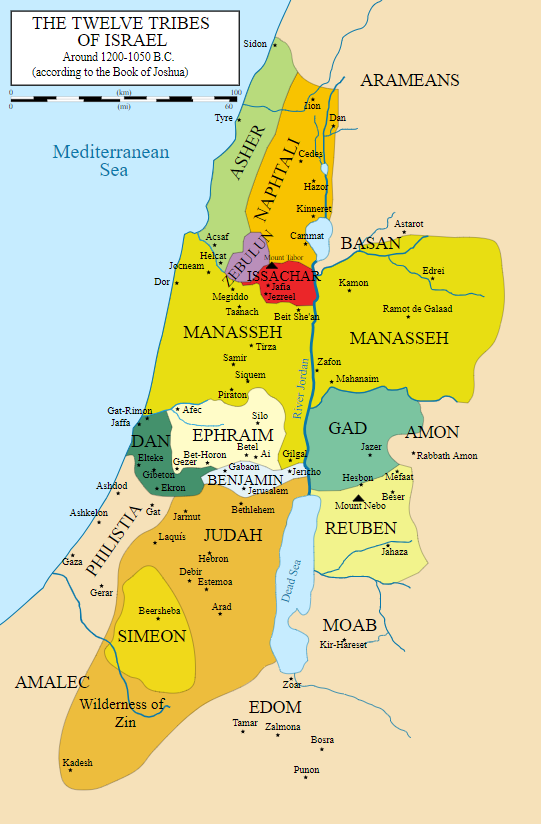
Revelation 7 curiously omits the name of Dan from the list of the tribes of the 144,000 witnesses. One wonders why this is so. Many hold that Dan was probably omitted because he represented full-fledged idolatry in Israel (Judges 18:30). Judges 17 and 18 tell the story of how the priesthood is commercialized and treated in a pagan utilitarian way by a family of Ephraim and a clan of Dan. Revelation 7 does not also mention Ephraim, though it mentions Manasseh and Joseph (the father of Ephraim and Manasseh). Both Ephraim and Dan were guilty of idolatrous worship throughout the Old Testament. 
And the sons of Dan set up the engraved image. And Jonathan, the son of Gershom, the son of Manasseh, he and his sons were priests to the tribe of Dan until the day of the captivity of the land. And they set up Micah's engraved image for themselves, the image which he made, all the time that the house of God was in Shiloh. (Judges 18:30-31)
And the king took counsel, and made two calves of gold and said to them, It is too much for you to go up to Jerusalem. Behold your gods, O, Israel, who brought you up out of the land of Egypt! And he set the one in Bethel, and he put the other in Dan. And this thing became a sin, for the people went to worship before the one, even to Dan. And he made a house of high places, and made priests of the lowest of the people, who were not the sons of Levi. (1Kings 12:28-31)
Notably, Dan's problems in the book of Judges revolved around their difficulties with inheriting the land.
When the territory of the people of Dan was lost to them, the people of Dan went up and fought against Leshem, and after capturing it and striking it with the sword they took possession of it and settled in it, calling Leshem, Dan, after the name of Dan their ancestor. (Joshua 19:47)
And in those days the tribe of the people of Dan was seeking for itself an inheritance to dwell in, for until then no inheritance among the tribes of Israel had fallen to them. (Judges 18:1)
The Amorites pressed the people of Dan back into the hill country, for they did not allow them to come down to the plain. (Judges 1:34) 
 In contrast, the Amorites were not able to defeat and drive out the people of Joseph:
The Amorites persisted in dwelling in Mount Heres, in Aijalon, and in Shaalbim, but the hand of the house of Joseph rested heavily on them, and they became subject to forced labor. (Judges 1:35)
Revelation is a book of victory, of overcomers; so, it is not surprising if a perpetual loser (Dan) is omitted from the list of overcomers and an overcomer (Joseph) is included in it.

Surprisingly, however, Dan is the first listed in the division of the new land by Ezekiel 48.
Ezekiel 48:1  “These are the names of the tribes: Beginning at the northern extreme, beside the way of Hethlon to Lebo-hamath, as far as Hazar-enan (which is on the northern border of Damascus over against Hamath), and extending from the east side to the west, Dan, one portion.

Round-about Ethics for Benjamin

Judges 21 recounts the story of how the children of Israel provided wives for the surviving Benjamite males.

An important episode is the gathering of the entire assembly before the Lord at Mizpeh for worship, prayer, and communion.

Since, by an act of vengeance, the whole tribe of Benjamin was destroyed except a few remaining, the Israelites felt it morally obligatory to ensure that the Benjamite tribe survived through posterity. However, they had made an oath saying, "There shall not any of us give his daughter unto Benjamin to wife." Consequently, their obligation towards the oath clashed with their obligation towards Israel (that by doing the former, they risked losing one tribe of Israel). Therefore, they decided to first find a tribe that had not been represented at the assembly before the Lord at Mizpeh. They found that Jabeshgilead was not represented. For the Israelites, this was a capital crime. It was unforgivable to ignore the national assembly before the Lord. So, they sent 12000 warriors to destroy Jabeshgilead, but bring alive all virgins they found there. The warriors did so and found 400 virgins, who were then given to the Benjamite males as wives. However, there still was a shortage. Then, the following episode takes place:
And they said, There must be an inheritance for the survivors of Benjamin, that a tribe not be blotted out from Israel. Yet we cannot give them wives from our daughters.¨ For the people of Israel had sworn, Cursed be he who gives a wife to Benjamin.¨ So they said, Behold, there is the yearly feast of the LORD at Shiloh, which is north of Bethel, on the east of the highway that goes up from Bethel to Shechem, and south of Lebonah.¨ And they commanded the people of Benjamin, saying, Go and lie in ambush in the vineyards and watch. If the daughters of Shiloh come out to dance in the dances, then come out of the vineyards and snatch each man his wife from the daughters of Shiloh, and go to the land of Benjamin. And when their fathers or their brothers come to complain to us, we will say to them, Grant them graciously to us, because we did not take for each man of them his wife in battle, neither did you give them to them, else you would now be guilty.¨ And the people of Benjamin did so and took their wives, according to their number, from the dancers whom they carried off. Then they went and returned to their inheritance and rebuilt the towns and lived in them. And the people of Israel departed from there at that time, every man to his tribe and family, and they went out from there every man to his inheritance. (Jdg 21:17-24)
The Israelites adopted a round-about tactic to ensure that their oath remained unbroken while the Benjamites also got their wives. The tactic was to create a situation that would make it legitimate for the Benjamites to steal for themselves wives, without the Israelites incurring the guilt of GIVING them women as wives. There are two things to note about this round-about tactic:
  1. It was clear of mens rea or criminal intention. The fathers had no intention to give their daughters as wives to the Benjamites. So, their intentions were guilt-free. This is evidenced by their complaint against the Benjamites.
  2. It was clear of actus reus or criminal conduct. The fathers did not act to give their daughters as wives to the Benjamites. So, they were clear of the guilt of criminal act.
In summary, the pre-monarchial community was able to solve a conflict of ethics situation successfully without any of them incurring any guilt for the same.

February 23, 2019

The Appeal of Visuals in Religious Experience: Mosaic Faith Vs Baalism

When all that generation had been gathered to their fathers, another generation arose after them who did not know the Lord nor the work which He had done for Israel. Then the children of Israel did evil in the sight of the Lord, and served the Baals; and they forsook the Lord God of their fathers, who had brought them out of the land of Egypt; and they followed other gods from among the gods of the people who were all around them, and they bowed down to them; and they provoked the Lord to anger. (Judges 2:10-12)
It seems obvious that the newer generation either had more exposure to the visuals of Baalism than to those of the Mosaic religion or found Baalism more aesthetically appealing than the faith of their fathers. Evidently, Baalism was suffused with images, idols, symbols, and shrines. The visual imagery had a grappling effect on the minds and imaginations of the adherents. Additionally, polytheism has a particularly pluralistic and diversifyingly liberating influence. The Canaanite religion was polytheistic with multiple Baals and gods and, unlike the Mosaic religion, it offered a “religiously-oriented” person a broader catalogue of visually satisfying divinities to choose from.
The Mosaic faith also had its visuals in the form of the visual elements of the Tabernacle, of the feasts of the Lord, and other leading imagery from the Torah.
Tie them as reminders on your hands and bind them on your foreheads. Write them on the doorposts of your houses and on your gates. (Deut 6:8,9)
Nevertheless, it could create a sense of being a legalistic system that was a “given” and not “chosen”. Even if they were given the option to choose between YHWH and the gods, such a choice was categorised as a choice between life and death.
See, I set before you today life and prosperity, death and destruction…. if your heart turns away and you are not obedient, and if you are drawn away to bow down to other gods and worship them, I declare to you this day that you will certainly be destroyed… (Deut 30:15-20)
Polytheistic cults, on the other hand, were not so exclusive. They, at least, seemed to provide some sort of freedom to choose any one of the many and yet stay religiously accepted and uncondemned. In fact, it would not be any problem for a polytheistic religion to accept YHWH as one of the pantheon, provided YHWH did not make claims to a supremacy that would only entail war.
The most important religious visual symbols in the Mosaic religion included the covenant symbols, the liturgical symbols, and the celebrative and commemorative symbols. The Israelites had very clear-cut commands against idolatry of any form whatsoever. Both the attempt to portray the divine in any visual form as well as worship of such a form was strictly forbidden.

So since you saw no form of any kind on the day the LORD spoke to you out of the fire at Horeb, be careful that you do not act corruptly and make an idol for yourselves of any form or shape, whether in the likeness of a male or female, of any beast on the earth or bird that flies in the air, or of any creature that crawls on the ground or fish in the waters below. When you look to the heavens and see the sun and moon and stars—all the host of heaven—do not be enticed to bow down and worship what the LORD your God has apportioned to all the nations under heaven. (Deut 4:15-19)
Visual representation of God was forbidden because any visual only led away from and not towards the true and living God. This view is contrary to the popular polytheistic view that the image helps to draw the worshipper closer to her deity; perhaps, it might draw her closer to the deity represented by the image in her mind, but it would not be able to draw her closer to the Biblical YHWH for sure. In that sense, the image only helps to reinforce the visual and sensible element of religious experience rather than the spiritual and infinite one.

But, the Mosaic religion did have its visuals, the foremost of which were the covenant ones. Among these, the circumcision was certainly prominent. In fact, the Hebrews regarded circumcision as the symbol that set them apart from the non-Hebrews; the non-Hebrews were the uncircumcised.
Who is this uncircumcised Philistine that he should defy the armies of the living God? (1Sam.17:26)
Other related symbols were tassels with blue cords on garments (Deut 22:12, Num.15:38) and the phylacteries (in present day Judaism, converted into symbolism from Deut 6:8, 11:18, etc).
Then, there were the liturgical symbols of the Tabernacle itself with all its building material, tools, vessels, and articles. This included the formula of the anointing oil that was forbidden from being duplicated and used for any other purpose than for liturgical anointing.
And you are to tell the Israelites, ‘This will be My sacred anointing oil for the generations to come. It must not be used to anoint an ordinary man, and you must not make anything like it with the same formula. It is holy, and it must be holy to you. Anyone who mixes perfume like it or puts it on a layman shall be cut off from his people.’” (Exo.30:31)
One of the most powerful Tabernacle symbols was the fire of the Tabernacle itself which had fallen down from heaven, from the very presence of God.
And fire came out from before the Lord and consumed the burnt offering and the pieces of fat on the altar, and when all the people saw it, they shouted and fell on their faces. (Lev.9:24)
Fire shall be kept burning on the altar continually; it shall not go out. (Lev.6:13)
One may think that it would be impossible for someone to know about this fire from heaven burning on the altar throughout generations and yet abandon this altar for the altars of the Baals. However, given the fact that the Tabernacle was located at a single place in Shiloh which may not have made it possible for most of the Israelites to visit regularly, and the fact that the altars of Baal were everywhere around (since the Canaanites lived together with the Israelites pursuing their own religions), it seems more evident that the visual appeal of Baal would be stronger than the distant appeal of the Tabernacle. Of course, the Reubenites, Gadites, and the Manassehites had also built a memorial altar on the other side of the river Jordan to facilitate coming generations with a visual imagery that linked them to the Tabernacle (Joshua 22), yet it did not retain a towering visual influence on the minds of the Israelites amidst the countless edifices of polytheistic imagery that surrounded them. It may have retained the meaning of the symbol if the Mosaic religion was strongly in place. That altar did not take into account the divine foreknowledge.

"'But if you do not drive out the inhabitants of the land, those you allow to remain will become barbs in your eyes and thorns in your sides. They will give you trouble in the land where you will live.” (Lev.6:13)
The angel of the Lord went up from Gilgal to Bokim and said, “I brought you up out of Egypt and led you into the land I swore to give to your ancestors. I said, ‘I will never break my covenant with you, and you shall not make a covenant with the people of this land, but you shall break down their altars.’ Yet you have disobeyed me. Why have you done this? And I have also said, ‘I will not drive them out before you; they will become traps for you, and their gods will become snares to you.’” (Judges 2:1-3)
But, it is the desire to change the practical symbols though retaining the theological form that is more threatening to faith.
When the LORD your God cuts off before you the nations you are entering to dispossess, and you drive them out and live in their land, be careful not to be ensnared by their ways after they have been destroyed before you. Do not inquire about their gods, asking, “How do these nations serve their gods? I will do likewise.” You must not worship the LORD your God in this way, because they practice for their gods every abomination which the LORD hates. They even burn their sons and daughters in the fire as sacrifices to their gods. (Deut 12:29-31)
Eventually, such an attempt to serve YHWH the way the world did only ended up in a breakdown of family and the sacrifice of their children to the gods of the world. The most serious example of this was Manasseh, the most anti-people king ever.
Manasseh also built altars in the house of the LORD, of which the LORD had said, “In Jerusalem I will put My Name.” In both courtyards of the house of the LORD, he built altars to all the host of heaven. He sacrificed his own son in the fire,a practiced sorcery and divination, and consulted mediums and spiritists. He did great evil in the sight of the LORD, provoking Him to anger. Manasseh even took the carved Asherah pole he had made and set it up in the temple, of which the LORD had said to David and his son Solomon, “In this temple and in Jerusalem, which I have chosen out of all the tribes of Israel, I will establish My Name forever. (2 Kgs.21:4-7)
The Bible cautions:
And what concord hath Christ with Belial? or what part hath he that believeth with an infidel? And what agreement hath the temple of God with idols? for ye are the temple of the living God; as God hath said, I will dwell in them, and walk in them; and I will be their God, and they shall be my people. Wherefore come out from among them, and be ye separate, saith the Lord, and touch not the unclean thing; and I will receive you. And will be a Father unto you, and ye shall be my sons and daughters, saith the Lord Almighty. (2 Cor.6:15-18)
Do not love the world or anything in the world. If anyone loves the world, the love of the Father is not in him. For all that is in the world— the desires of the flesh, the desires of the eyes, and the pride of life— is not from the Father but from the world. The world is passing away along with its desires, but whoever does the will of God remains forever. (1John 2:15-17)

December 25, 2018

The Sword of Joshua


And they took it and struck it with the edge of the sword -- its king, all its cities, and all the people who [were] in it; he left none remaining, according to all that he had done to Eglon, but utterly destroyed it and all the people who [were] in it. (Josh 10:37)

References to war and killings in the Bible look extremely offensive to modern pacifists. Nevertheless, the God of the Bible Himself engages in war and killings as a way of executing justice and righteousness. Execution of justice involves employment of violent measures. The first human mass annihilation was through the Great Flood through which only Noah and those with him survived. Following that, human government was instituted so that "Whoever sheds man's blood, by man his blood shall be shed" (Gen.9:6), and a promise was given that the world will never be again destroyed by a global flood. However, the present world is reserved for judgment by fire (2Pet.3:7). Meanwhile, divine justice is locally executed by at least three different means: sword (war), plague (disease outbreaks), and famine (2 Sam. 24:13; 2Ch. 20:9; Jer. 11:22; 14:12,13; 15:2; 21:9; 24:10; 27:8,13; 29:17,18; 32:36; 34:17; 38:2; 42:17,22; 44:13; Eze. 6:11,12; 12:16). Ezekiel 5:17 adds also "wild beasts" to these.

The sword of Joshua against the Canaanites was judgment by means of sword. Jeremiah and Ezekiel prophesied that Israel itself (who was once used by God to bring justice by sword) would be punished by the sword, plague, and famine.

Jeremiah 24:10 - I will send the sword, famine and plague against them until they are destroyed from the land I gave to them and their ancestors.

The sword is symbolic of political authority instituted by God.

Romans 13:3-4 For rulers are not a terror to good works, but to evil. Do you want to be unafraid of the authority? Do what is good, and you will have praise from the same. For he is God’s minister to you for good. But if you do evil, be afraid; for he does not bear the sword in vain; for he is God’s minister, an avenger to execute wrath on him who practices evil.

July 22, 2018

The Significance of Baptism

Baptism may be compared to a wedding ceremony. A couple may be very much in love with each other, but it is only through marriage that they are pronounced as husband and wife. The wedding ceremony, with exchange of vows and symbols of union establishes them as belonging to each other and becoming one. Similarly, baptism pronounces the baptized publicly as united to Christ.

However, in a community that desacralizes the sanctity of marriage, the significance of a wedding ceremony soon fades. If conjugal rights and all rights of marriage are not made dependent on the act of marriage, then marriage loses its significance. Similarly, a church that doesn't provide baptism as a condition desacralizes the divine commandment of baptism.

This is one reason why I believe annunciating baptism as precondition for participation in communion is quite justified. A married couple may have communion with each other daily, but this communion flows from the single act of marital union in their nuptial ceremony. Similarly, a believer may partake of communion daily as remembrance of Christ's death. However, that remembrance flows from his/her single act of union with the Lord in the baptism of His death, burial, and resurrection. In the sameway that marriage is once for all, baptism is also one.

August 15, 2017

Multilingual Churches


There are various ways in which linguistic issues are being tackled by churches. For instance, there are those who wish to reach out to their own linguistic community and so traverse land and sea to reach their own community. Examples of such would be Hindi or Sindhi or Malayalee congregations making efforts to establish linguistic church communities in other nations. There are others who wish to only have their linguistic denomination in the foreign country they are living in. Sadly, not many of these may be willing to reach and draw in disciples from other linguistic communities.

However, there are examples of churches that hold services in a particular vernacular or more common language, but are not known as a Hindi church or a Chinese church or an English church. These are more open to reach out everyone around and when they feel the need to have services in more languages, they do so while keeping intact the vision of the one flock.

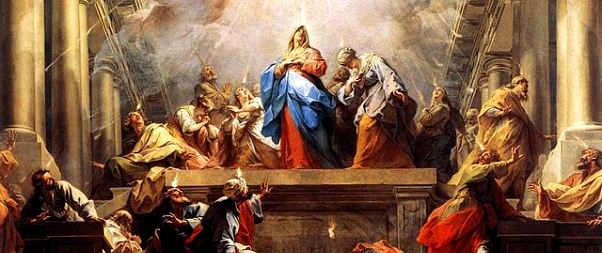
In Acts 2, we have a very vivid example of God's way. When the disciples were filled with the Spirit, they spoke in tongues, but the Scripture testifies that people from various language groups heard in their own respective languages the words that the disciples were uttering by the Spirit.
And when this sound occurred, the multitude came together, and were confused, because everyone heard them speak in his own language. Then they were all amazed and marveled, saying to one another, Look, are not all these who speak Galileans? And how is it that we hear, each in our own language in which we were born? Parthians and Medes and Elamites, those dwelling in Mesopotamia, Judea and Cappadocia, Pontus and Asia, Phrygia and Pamphylia, Egypt and the parts of Libya adjoining Cyrene, visitors from Rome, both Jews and proselytes, Cretans and Arabs-- we hear them speaking in our own tongues the wonderful works of God." (Act 2:6-11)

Paul says to the Corinthians: "unless you utter by the tongue words easy to understand, how will it be known what is spoken? For you will be speaking into the air." (1Co 14:9)

Truly the Church is redeemed by Christ's "blood out of every tribe and tongue and people and nation" (Rev 5:9) and Christ wants all to hear the words of His Gospel of liberation in words that can be understood. It is very important for people to hear the words distinctly and understand their meaning.
So they read distinctly from the book, in the Law of God; and they gave the sense, and helped them to understand the reading. (Neh 8:8)

Even things without life, whether flute or harp, when they make a sound, unless they make a distinction in the sounds, how will it be known what is piped or played? ...So likewise you, unless you utter by the tongue words easy to understand, how will it be known what is spoken? For you will be speaking into the air.... Therefore, if I do not know the meaning of the language, I shall be a foreigner to him who speaks, and he who speaks will be a foreigner to me. Even so you, since you are zealous for spiritual gifts, let it be for the edification of the church that you seek to excel. (1Co 14:7-12)

Paul here talks about speaking in tongues and the importance of the gift of interpretation. The principle, however, is that people should be able to understand the meaning of the words in worship service. Of course, this also means that preachers shouldn't use jargon and words (no matter how elite it may make themselves feel) that make no sense to the congregation. On the other hand, it also means that where the best possible solution is procuring the help of an interpreter to translate the message (as in bi-lingual or multi-lingual single services), the preacher must try to facilitate ease of translation rather than make it trying to the interpreter.

August 07, 2017

Employee Exploitation - What Does The Bible Say?


One of the greatest evils prevailing among job sectors is the evil of injustice against employees. Some examples of employee exploitation are:

  1. Not paying salaries or wages in time.

  2. Overtasking them and not providing time for necessary rest (Sabbatical Injustice).

  3. Drawing them into unjust employment contracts with terms that are selfish and indifferent towards the employee.

  4. Paying the employee less than what is justly his/her due.

  5. Abusing them and dehumanizing them or treating them in an inhumane manner; humiliating or treating them as inferior.

  6. Blackmailing or forcing them to do things against their conscience.

  7. Placing them in situations which they are unprepared for and would certainly fail (Uriah's Predicament: David arranged for him to be placed in a position where he would certainly be killed).

  8. Demanding directly or indirectly illegitimate and illegal conduct from the employee.

  9. Enslaving them.

  10. Not relieving them of job with provision when they leave the company or organization.


God is against employee injustice and will hold accountable any employer who fails to do justice to employees. Following are some scriptures by which God declares His law of Justice and how He deals with the workers of iniquity:

Lev 19:13 ' You shall not cheat your neighbor, nor rob [him.] The wages of him who is hired shall not remain with you all night until morning.

Deu 24:14-15 "You shall not oppress a hired servant [who is] poor and needy, [whether] one of your brethren or one of the aliens who [is] in your land within your gates.  Each day you shall give [him] his wages, and not let the sun go down on it, for he [is] poor and has set his heart on it; lest he cry out against you to the LORD, and it be sin to you.

Jer 22:13 "Woe to him who builds his house by unrighteousness And his chambers by injustice, [Who] uses his neighbor's service without wages And gives him nothing for his work.

Mal 3:5 And I will come near you for judgment; I will be a swift witness Against sorcerers, Against adulterers, Against perjurers, Against those who exploit wage earners and widows and orphans, And against those who turn away an alien -- Because they do not fear Me," Says the LORD of hosts.

Jas 5:4 Indeed the wages of the laborers who mowed your fields, which you kept back by fraud, cry out; and the cries of the reapers have reached the ears of the Lord of Sabaoth.

The Lord of Sabaoth is the Lord of all work and wages of righteousness on the earth and will hold accountable all who oppress those who are placed under them.
Mat 24:45-51
Who then is a faithful and wise servant, whom his master made ruler over his household, to give them food in due season? Blessed [is] that servant whom his master, when he comes, will find so doing. Assuredly, I say to you that he will make him ruler over all his goods. But if that evil servant says in his heart, 'My master is delaying his coming,' and begins to beat [his] fellow servants, and to eat and drink with the drunkards, the master of that servant will come on a day when he is not looking for [him] and at an hour that he is not aware of,  and will cut him in two and appoint [him] his portion with the hypocrites. There shall be weeping and gnashing of teeth.

God is especially very serious about providing times of due rest to employees so that they are not burnt out.
Exo 23:12 "Six days you shall do your work, and on the seventh day you shall rest, that your ox and your donkey may rest, and the son of your female servant and the stranger may be refreshed."

The sabbath day was for refreshing and recovery and healing, quite contrary to what the Jews began to think- they opposed even healing on that day. Sabbath was made for man and not man for sabbath.

Providing a proper leave and rest system is binding on employers.

Now, the employer certainly has the right to give to workers more than they deserve. This would be just an act of Grace. 
Mat 20:15 'Is it not lawful for me to do what I wish with my own things?'

However, a just and righteous employer will never find a way to give to employees less than their day's wages of labour (The denarius mentioned in the Parable was a laborer's daily wage).

Regarding provision on relieving from job, God specified laws:
Deu 15:13-14 "And when you send him away free from you, you shall not let him go away empty-handed; you shall supply him liberally from your flock, from your threshing floor, and from your winepress. [From what] the LORD has blessed you with, you shall give to him.

Col 4:1 Masters, give your bondservants what is just and fair, knowing that you also have a Master in heaven.

August 01, 2017

Two Kinds of Rewards: Earthly Vs Heavenly

The Bible talks of two kinds of rewards: reward on earth and reward in heaven.

Regarding reward in heaven, Jesus said that GREAT will be the reward of those who:
1. Are PERSECUTED for righteousness' sake because of Jesus (Matt.5:12; Lk.6:23)
2. LOVE their enemies, do good and give expecting nothing in return (Lk.6:35)

The Bible deplores the state of those who seek after and are "men of this world whose reward is in this life" (Psa 17:14 NIV). Though referring chiefly to the religiously plump but fruitless state of the Jewish leaders against the outcasts like Lazarus in the Parable, Jesus did make sure to warn that the pursuit of reward on this earth could make one end as a destitute in the hereafter life.

"But Abraham replied, 'Son, remember that in your lifetime you received your good things, while Lazarus received bad things, but now he is comforted here and you are in agony. (Luk 16:25 NIV)

He also stated in His teachings:
"But woe to you who are rich, for you have already received your comfort.
Woe to you who are well fed now, for you will go hungry. Woe to you who laugh now, for you will mourn and weep. Woe to you when all men speak well of you, for that is how their fathers treated the false prophets. (Luk 6:24-26 NIV)

Do not work for food that spoils, but for food that endures to eternal life, which the Son of Man will give you. On him God the Father has placed his seal of approval." (Joh 6:27 NIV)

But God said to him, 'You fool! This very night your life will be demanded from you. Then who will get what you have prepared for yourself?' This is how it will be with anyone who stores up things for himself but is not rich toward God." (Luk 12:20-21 NIV)

Paul instructed Timothy:
Command those who are rich in this present world not to be arrogant nor to put their hope in wealth, which is so uncertain, but to put their hope in God, who richly provides us with everything for our enjoyment. Command them to do good, to be rich in good deeds, and to be generous and willing to share. In this way they will lay up treasure for themselves as a firm foundation for the coming age, so that they may take hold of the life that is truly life. (1Ti 6:17-19 NIV)

Now, there are at least three kinds of rewards that people go after:
POWER
PRAISE
PLEASURE

POWER: People pursue wealth as a source of power, or they pursue influence or brute force or any religious philosophy or occult of power to become powerful. Such pursuit may have some reward on earth but is ineffective to obtain anything for the life beyond. However, the Bible says that power belongs to God (Psa.62:11). True power is not the power of wealth or influence or might; true power comes from above.

PRAISE: People like to be admired, liked, followed, praised, adulated. They like to be respected and honored and be highly praised. But, this can be a trap and a snare that prevents us from being "fools for Christ's sake" (1Cor.4:10). The problem of the Jews was that they sought the honor and praise of men and so could never please God. But, Jesus said that true honor only comes from the Father (John 5:44). Jesus declared that HE DID NOT RECEIVE HONOR FROM MEN (John 5:41). His passion was to glorify the Father on earth and to finish His work (John 17:4). The most joyful words that will be spoken about the faithful on the Last Day will be: ,`Well done, good and faithful servant; you were faithful over a few things, I will make you ruler over many things. Enter into the joy of your lord.' (Mat 25:21 NKJ)

PLEASURE: People also pursue pleasure, comfort, luxury and delight. The Book of Ecclesiastes gives ample examples of the vanity of pleasure. Solomon describes it as mere chasing after wind. Desire to please people and be pleased led Solomon into many compromises and his downfall. Contrary to this wild pursuit of Solomon, his father David confessed: You will show me the path of life; In Your presence is fullness of joy; At Your right hand are pleasures forevermore. (Psa 16:11 NKJ).

The sons of Korah sang: For a day in Your courts is better than a thousand. I would rather be a doorkeeper in the house of my God Than dwell in the tents of wickedness. (Psa 84:10 NKJ)

We are saved by faith but we are rewarded according to our works, not works of the law but works of the Father (Matthew 16:27)

Some important rewards promised in the Scriptures:


"But when you do a charitable deed, do not let your left hand know what your right hand is doing, that your charitable deed may be in secret; and your Father who sees in secret will Himself reward you openly. (Mat 6:3-4 NKJ)

Oil and Wine"But you, when you pray, go into your room, and when you have shut your door, pray to your Father who is in the secret place; and your Father who sees in secret will reward you openly. (Mat 6:6 NKJ)

"But you, when you fast, anoint your head and wash your face, so that you do not appear to men to be fasting, but to your Father who is in the secret place; and your Father who sees in secret will reward you openly. (Mat 6:17-18 NKJ)

And whoever gives one of these little ones only a cup of cold water in the name of a disciple, assuredly, I say to you, he shall by no means lose his reward." (Mat 10:42 NKJ)

Now he who plants and he who waters are one, and each one will receive his own reward according to his own labor.(1Co 3:8 NKJ)

And whatever you do, do it heartily, as to the Lord and not to men, knowing that from the Lord you will receive the reward of the inheritance; for you serve the Lord Christ. (Col 3:23-24 NKJ)

Therefore do not cast away your confidence, which has great reward. (Heb 10:35 NKJ)

Look to yourselves, that we do not lose those things we worked for, but that we may receive a full reward. (2Jo 1:8 NKJ)

"And behold, I am coming quickly, and My reward is with Me, to give to every one according to his work. I am the Alpha and the Omega, the Beginning and the End, the First and the Last." (Rev 22:12-13 NKJ)

It would be very unwise to try to guess what rewards He has in store for us. For the Scripture says, "Eye has not seen, nor ear heard, Nor have entered into the heart of man The things which God has prepared for those who love Him." (1Co 2:9 NKJ). Eternity has eternal surprises in store for us.

July 29, 2017

Assassins of Faith Vs Keepers of Faith - A Study

Excerpt from the Author's Explorations of Faith: Studies of the Heroes of Faith in Hebrews 11 (2009)

ASSASSINSKEEPERS
Doubt
Desire
Division
Confession
Conduct
Communion

THE SCRIPTURE warns us not to be slothful but to be diligent in faith (Heb. 6:12; Judg. 18:9). Faith is not only to be guarded (Rev. 14:12) but also to be contended or fought for (Jude. 3); for it is only by fighting that one keeps one’s faith (2Tim. 4:7). The crisis of faith is a condition brought in by at least three faith-assassins: doubt, desire, and division.

Faith-assassins Doubt. Doubt is helpful in the pre-faith condition by narrowing one’s direction towards truth. That is to say, as doubt breaks all the false beliefs of the past one by one, a person is set in the direction of knowing the truth. In this sense, doubt is the precursor of faith. However, the moment faith is torched by truth “all the darknesses of doubt are dispersed”, to use Augustine’s expression. Doubt no longer has any place but its place is taken by the certainty, peace, and repose of faith. But even in the pre-faith condition, doubt cannot be segregated from seeking faith. Absolute doubt, in the sense that the possibility of truth is hung in perpetual doubt, can never come to truth for though it may see it face to face yet its doubt would prevent it from recognizing it as so. A mind committed to doubt can never submit in faith to truth. Therefore, absolute doubt is the greatest enemy of true faith.

There are chiefly seven Greek expressions that have been translated as “doubt” in the New Testament (KJV): aporeo (Jn. 13:22) meaning “to be perplexed”; diaporeo (Ac. 2:12; 10:17) meaning “to be thoroughly perplexed”; meteorizo (Lk. 12:29) meaning “to suspend as in mid-air”; airo psuche (Jn. 10:24) meaning “to keep the soul in suspension as in air”; dialogismos (Rom. 14:1; 1 Tim. 2:8) meaning “to reason” or “to argue”; diakrino (Mt. 21:21; Rom. 14:23) meaning “to judge differently” or “to discriminate”; and distazo (Mt. 14:31; 28:17) meaning “to waver”. We can learn of the different ways in which doubt finds intrusion in one’s life by looking at the usage of these words.

First, doubt appears in the form of perplexity or a loss of answer. This is indicated by the word aporeo. For instance, when Festus introduces Paul the prisoner to Agrippa the King, he says that the Jews were accusing Paul of some questions related to the Jewish religion; but since he was not well acquainted with this religion he was at a loss of answer or doubt (aporeo) how to judge him (Ac. 25:20). Obviously, the KJV would have done better to translate the word as “was perplexed” or “confounded” instead of “doubted”. But, still it is also true that perplexity is a condition of doubt since it contains the element of uncertainty. Festus lacked the confidence to judge Paul because he was confounded by the complexity of the problems that this trial presented to him. Therefore, he doubted about this matter of judging Paul. He was at a loss of answer. An intense form of this perplexity is indicated by the word diaporeo which means to be thoroughly (dia) perplexed. Perplexity indicates the condition of doubt as dilemma. It is the condition of neither knowing nor not knowing. It is the condition of being totally unable to understand something that seems to be significant and demanding an answer. Undeniably, faith does sometimes come across situations that confound and perplex it for a want of answer. There are things that can happen to us that we can’t explain by any rational means, for instance. Or, there can be a question put forth before faith which it immediately lacks an answer for, though it knows that there must be some answer to it. However, in many cases when complexity presents itself to us the temptation is to turn away to simpler things. This is a natural instinct. One tries to avoid unwanted complications, especially when they appear insoluble or even too demanding. One tends to walk around the problem and if incapable of, tries to turn on it. This is what happened with those disciples who turned away from Jesus because they felt He was becoming too complicated for them to get along with (Jn. 6:60, 66). But when Jesus turned to the twelve and asked them if they would also go away, Peter gave an answer which is a classic response to this dilemma of faith. He answered: “Lord, to whom shall we go? You have the Words of eternal life” (Jn. 6:68, MKJV). Peter understood the fact that there cannot be a turning away from something without a turning away to something else. There is no middle ground. Peter knew that this was an either/or situation. One could choose Christ and eternal life or choose to relinquish both. He made the wiser decision to stay with Christ despite the inability to understand several things. A more practically existential situation confronted Job, as seen earlier. It was practically existential because the absurdity or perplexity of the suffering that he went through was thoroughly personal and its answer too evading (Job 7). Yet, he knew that there could be no turning back from God. God was where his world came to an end. God was his no-returning point. Therefore, despite all the confoundedness of his suffering, Job held on to God in faith. And when his wife reprimanded him for holding on to his faith and told him to curse God and die instead of bearing the brunt of this absurd life, he answered her saying “You speak as one of the foolish ones speak. What? Shall we receive good at the hand of God, and shall we not receive evil?” (Job 2:10, MKJV). In other words, he in turn demanded from her an explanation for considering experience of evil as sufficient proof for turning away from God, even if such evil came from God. The finality of his faith in God could admit no doubt in God.

Another way in which doubt presents itself to us is suspense. The word comes from the Latin suspensus meaning “suspended” (akin to the Greek meteorizo and airo psuche, see above). The word indicates a condition of uncertainty fraught with intense curiosity, fear, or anxiety. Jesus told His disciples to stay away from such a condition (Lk. 12:29). Feelings of anxiety due to uncertainty may come to suspend our souls in doubt, but they should not be allowed to take hold of our lives; in other words, worry or anxiety should not become the condition of our lives. For such anxiety can easily lead to despair and a total shipwreck of faith. Similarly, unwanted curiosity can also be fatal to faith as seen in Eve’s case. For when the devil told her that the forbidden fruit was forbidden not because God sought her welfare but because He didn’t want her to be like Him, she immediately was convinced by his words (Gen. 3:4-6). Her curiosity regarding the forbidden fruit led her obey the devil’s lie. If God has forbidden us something, there is no danger greater than trying to conduct a scientific analysis of the forbidden thing. It is no surprise then why the Ephesian believers burnt all books of curious and magical arts[1] when they accepted the Lord (Ac. 19:19, KJV, Amplified). This is so because such curiosity can lead to a departure from faith. It is in this regard that the Mosaic Law commanded the Israelites to destroy all images and things related to false belief to prevent their influence from corrupting the Israelites (Deut. 7:3-5). The images represent the symbols of false beliefs that stand against the faith of God. They are doors to disbelief. Therefore, sympathetic curiosity towards what is logically known to be wrong must be avoided. By “logically wrong” is meant those ideas that contradict the rational sense. For instance, in the story of Eve she turned towards the illogical belief that she could become like God (who is spiritual and infinite in wisdom) by eating a physical fruit and to the false idea that God was either jealous or afraid of her becoming like Him; as if she could become like Him and that God was afraid of His own creation. Similarly, the sympathy towards idols is absurd since an idol is not only a lifeless object but also symbolic of the vanity and falsehood of man. Therefore, one must guard oneself against any fear or excitement that is both irrational and godless.

The third kind of doubt is more intriguing. It appears in the form of reasoning or argumentation and is indicated by the word dialogismos meaning that form of argumentation that is controversial, unending, or false. It is in this sense that it is sometimes rendered as “imaginations” for its speculative nature is averse to any conclusion. In other words, dialogismos is doubt that expects no final answer. The imagination keeps going on finding no final ground to stand on; thus, hanging suspended (meterorizo) in curiosity and doubt all the time. I think our age understands this form of doubting better than any age before since, in our age, it is this kind of a scholar that is highly appreciated while the one who claims to have the answer is labeled as fundamentalist and narrow-minded. While in the past the wise man was he who had more answers and fewer questions, now he is one who has more questions and fewer answers. The modern wise man is like the Greek sophist who excelled in clever arguments but had no belief in absolute truth: his arguments generated more doubts than solutions. Our English word “sophistry” comes from this “sophist” and means “clever, misleading, and deceptive argument”. Obviously, this form of doubt or methodological skepticism is deliberate, proceeding from the bias that detests absolute solution to any problem. That is the reason why the Scripture warns several times to keep away from such love for show of cleverness and unhealthy disputing that signifies pride and rebellion instead of humility (Phil. 2:14; Rom. 14:1; 1Tim. 2:8; cf. 1Tim. 6:3-5).

The next kind of doubt is diakrino meaning “to judge by analysis” or “to make a difference”. In relation to doubt it means “to make a different judgment”, “to think otherwise”, or “allow for some other possibility as well”. It is in this sense that it is used in Matthew 21:21 when Jesus tells His disciples “Truly I say to you, If you have faith and do not doubt (me diakrithete), you shall not only do this miracle of the fig tree, but also; if you shall say to this mountain, Be moved and be thrown into the sea; it shall be done.” (Mt. 21:21, MKJV). Similarly, James says: “let him ask in faith, doubting nothing (meden diakrinomenos). For he who doubts (diakrinomenos) is like a wave of the sea, driven by the wind and tossed” (Jas. 1:3, MKJV). Obviously, this kind of doubting is antithetical to faith since it introduces a rival element (a foreign particle) into one’s framework of belief. This kind of double-thinking is what leads to distazo or to the inability of holding on to faith, thus becoming unstable (as in Peter’s case when he walked on water and then started sinking due to fear); for the natural thoughts of the mind are set in conflict against the supernatural truths of God leading to a weakening of faith. The imbalance and instability caused by diakrino can be compared to an airplane (on flight) that loses its balance due to some technical failure to keep up with the laws of aerodynamics. That technical failure may be compared to diakrino when the plane wobbles between the law of aerodynamics and the law of gravity, for instance. The loss of balance is due to the plane’s inability to totally comply with the law of aerodynamics. The problem is solved if the airplane keeps to the purpose of its design, which is to be in air till it lands safely on the ground; the tragedy is when it fails to do that by giving in to anti-elements. Now, the anti-element may not be false in itself; for instance, the law of gravity is true as well as the fact that Peter could not naturally walk on water. However, in matters of faith the natural must submit to the supernatural and not vice versa. Even as the airplane is designed to fly in air, a man of faith is designed to sail on the winds of God’s promises. Abraham was a man of faith. He was not a man of a double-opinion or double-thinking. Therefore, there were no regrets about his obedience to God; neither was there any possibility of a return for him. The Scripture testifies about him that “he staggered not (ou diekrithe) at the promise of God through unbelief (apistia); but was strong in faith, giving glory to God” (Rom. 4:20). Apistia is the antonym of pistis which is faith. Thus, Abraham didn’t allow an anti-faith element to make him double-think about and doubt the promises of God.

Desire. The second enemy of faith is false desire. Desire is the drive of the human will. Therefore, it is always seen as desire to do something or to get something in the sense that the mind is set on that particular thing, ultimately leading to action in that direction. In this sense, to will something is to desire that thing. In fact, the Greek word thelo is translated as both “to will” and “to desire” in the New Testament. However, in human experience, desire is often ambivalent as the Scripture says: “For the desires of the flesh are opposed to the [Holy] Spirit, and the [desires of the] Spirit are opposed to the flesh (godless human nature); for these are antagonistic to each other [continually withstanding and in conflict with each other], so that you are not free but are prevented from doing what you desire to do” (Gal. 5:17, Amplified). And again, “I fail to practice the good deeds I desire to do, but the evil deeds that I do not desire to do are what I am [ever] doing” (Rom. 7:19, Amplified). Obviously, there are two kinds of desires at work here and the either one gives in to the other in the struggle for letting out. One is lawless; the other, lawful. One is brutish; the other, rational. One is carnal; the other, spiritual. One is godly; the other, ungodly. One is sinful; the other, holy. While spiritual desire is rationally sound, emotionally stable, and conscientiously clear; lawless desire bypasses reason, corrupts the feelings, stalls the conscience, and captivates the memory. That is the reason why the Scripture says, “Beloved, I implore you as aliens and strangers and exiles [in this world] to abstain from the sensual urges (the evil desires, the passions of the flesh, your lower nature) that wage war against the soul” (1Pt. 2:11, Amplified).

The fatal blow of desire is its luring the mind to justify wickedness. This is when faith is jettisoned and deception sneaks in. Sometimes even a whole nation can fall prey to the rule of passion by rebelling against truth. In his Republic Plato quotes Damon as saying “when modes of music change, the fundamental laws of the State always change with them.”[2] We may not totally agree with Plato’s view against musical innovations; but when one sees the unrestrained wand of passion displaying gestures of rebellion in any art-form, one cannot but suspect that values are being redefined. The Word warns, “Woe unto them that call evil good, and good evil; that put darkness for light, and light for darkness; that put bitter for sweet, and sweet for bitter!” (Isa. 5:20).

The simplicity of Abraham despite the blessings of God on his life is evident from his contentment to live in tents all the days of his life (Heb. 11:9). It is also evident from his contentment with what only God gave to him and not desiring even a shoe lace by any other means. He made a covenant with God to never be blessed except he was blessed by God; therefore, when the king of Sodom came to him offering the spoils of war, he replied: “I have lifted up my hand and sworn to the Lord, God Most High, the Possessor and Maker of heaven and earth, that I would not take a thread or a shoelace or anything that is yours, lest you should say, I have made Abram rich” (Gen. 14:22, 23, Amplified). Abraham knew God’s promise of blessing to him and wanted nothing more than that. That is faith.

The Scripture warns us that they who are minded to be rich fall into temptation and many foolish, irrational, and hurtful desires that lead to perdition (1Tim. 6:9). One example of it is Gehazi, the servant of Elisha the prophet, who ran after Naaman the Syrian and, in the name of his master, took from him stuff that his master had refused; but when Elisha questioned him where he had gone, he replied “nowhere”. This man had seen even the dead raised through Elisha’s prayer and still found the courage to lie to him. His conscience and memory were smeared by lust and greed to the extent that he believed that everything was okay despite his sinful act (2Kgs. 5:20-26). Similarly, David when captured by the lust for Bathsheba forgot all bonds of wickedness. He not only committed adultery with her (breaking God’s covenant) but also got her good husband ruthlessly murdered. This man, who once was so zealous for God in faith that he single-handedly defeated the giant Goliath, had now fallen prey to a woman’s beauty (2Sam.11). One doesn’t know what irrational justification his mind was framing in order to not lose the opportunity and companionship of lust. But it broke the heart of God. The same was also true of Judas Iscariot who sold the Lord for 30 pieces of silver after being with Him for three and half years. It is foolishness to think that one’s environment or conditions of living determine the strength of one’s faith. Adam and Eve were in a perfectly sinless environment before they fell into sin. Lucifer was an angel of God. Judas, the Pharisees, the Sadducees, and the chief priests saw Jesus in person and yet went against Him. Many of us often imagine that if we were as close as the disciples were to Jesus much of our spiritual struggle would be solved. Many desire at least one vision of Christ in this life. But one must understand that all such spiritual and sacred experiences put together can easily be suspended by the onslaught of lust; for lust hijacks all emotion, intelligence, memory, and conscience. Therefore, one must guard himself of all ugly desire that, though seemingly fulfilling, is disastrous in the end.

Division. By division is meant the lack of real spiritual fellowship and communion with God. This causes alienation and distancing from the knowledge of God. As a result, faith suffers loss. Division manifests itself in three forms: discord, dissension, and disunion.

Discord. Discord means a lack of agreement or harmony between two persons. While discord between men may be expressed or unexpressed, discord between man and God needs no expression since God knows what’s in the human heart. Discord between God and man is a matter of perspective and will-towards-something rather than ratio-empirical disagreement (as in matters of scientific or philosophical research). This is so because the relationship is not of the nature of this spatio-temporal pluralistic world where things stand divided from each other in space and time. God is unlike the world and its objects; He is not far from us, as the Scripture says, and we live and move and have our being in Him (Ac. 17:27, 28), which means His presence is more real than the world around us. Therefore, discord or concord between God and man is unlike discord and concord between worldly things, in the sense that it is not primarily a matter of ratio-empirical dispute. It is a matter of perspective, a matter of faith. Discord with God is not justifiable since it is not based on rational judgments but on the choice of will propelled by desire. Therefore, the Word says that God has given up those who, falling to evil desire and reprobate thinking, disgusted themselves by abominable practices (Rom. 1:21-28). The Bible says that the carnal mind is unsubmissive to the Law of God (Rom. 8:7). This lack of submission is not in the sense that it has some logical reasons for not submitting to God but in the sense that the intentions and actions of the carnal mind are opposite to the Law of God. The perspective-shift (from carnal to spiritual or vice versa) can be in a split of a second or gradual. It may be a reaction to a temptation or a moral decline through negligence. Whatever way, the perspective-shift is indicative of a shift from faith to practical disbelief.

Dissension. Dissension is the violent and aggressive form of discord in which the disagreement is vociferously expressed. While in the former case, discordant questions may not be expressed for fear of causing obstacle to the faith of others (see Ps. 73:15), in this case all shame and fear is set aside. The Bible uses different words to describe dissension; some of them are: murmuring, complaining, scoffing, mocking, blaspheming, strife of words, evil talking, perverse disputing, railing, speaking in hypocrisy, ungodly talking, etc (Phil. 2:14; Ps. 1:1; 1Tim. 4:2; 6:4, 5; 2Tim. 3:2; Jude 15, 16). Jesus warned His disciples that on the Day of Judgment men will have to give an account of every idle word that they speak (Mt. 12:36). Dissension comes from a heart of unbelief. It was because of such vehement and vexing ungodly talks that the Israelites were destroyed in the wilderness (1Cor. 10:10). All their opposition was based on their lusts and whims and not on any logic. God had shown such wonders to them that He had never shown before. He foiled the skill of the Egyptian magicians, broke the strength of pharaoh and his forces, tore the Red Sea into two, and walked before them as a pillar of cloud by day and a pillar of fire by night. I do not know of any nation on earth as a whole who had seen so much of God and yet disbelieved Him so much. They broke God’s commands whenever they liked and spoke whatever came to their mouth against God’s servants. Jude tells us that God destroyed them because of their unbelief (Jude 5).

Disunion. Disunion refers to a break-away from faith in God, thus from God. This is the severing of relationship with God. This disunion is the final end of a life of ungodly speech and action. It is the moral failure to hold on to faith and a good conscience and is characterized by a blasphemous lifestyle (1Tim. 1:18-20). This is what the Scripture also calls as a departure from faith by giving in to seducing spirits and the doctrines of devils (1Tim. 4:1). The doctrine of the devil is nothing but ultimate rebellion against God and His truth. The life without faith in God is a life of falsehood. It is a life of self-opposition (2Tim. 2:25). Therefore, says the psalmist, the ungodly shall not stand in the judgment, nor sinners in the congregation of the righteous (Ps. 1:5). The sinners who walk after ungodly counsel and associate to scoff at the revelation of God will not be justified (cp. Ps. 1:1). But the just shall live by faith (Rom. 1:17).

The Scripture warns believers against this alienation from God’s truth. It is the sin that brings a division between God and man (Isa. 59:2). The sin of willful commitment to unbelief and disunion with God is unpardonable. It leads to death (1Jn. 5:16). The book of Hebrews tells us that there is no chance of renewal for those who, after knowing the irrefutable truth of God, fall away from the faith (Heb. 6:4-6); for it is evident in their case that their falling away from faith is self-willed and not because of weakness in understanding the truth. The truth was crystal clear to them. Similarly, Peter says that the final condition of those who turn away from the knowledge of Christ after having escaped the pollutions of the world is worse than the first; for, he says, it would have been better for them not to have known the way of righteousness than to have known it and then willingly turn away from it (2Pt. 2:20, 21). Such a life becomes blasphemous, godless, and a willful opposing of the ways of God.

KEEPING FAITH


Faith Leap by Ayan GhoshNow, there are three chief ways in which faith can be kept; they are: confession, conduct, and communion. Let’s look briefly at each one of them and see how Abraham not only kept his faith but grew stronger in it by following these and by refusing false doubt, ungodly desire, and any sin-induced division. We do not say here that Abraham never made mistakes but despite of all his weaknesses and shortcomings he was justified before God because of his holding on to the Lord. He loved the Lord and no matter what he had to go through, he didn’t stagger in faith, since he knew that he could never leave the Lord that he knew as the true and gracious God. For him there were no regrets and no turnings back.

Confession. Confession is the verbal establishment of inward belief (Rom. 10:10). It is the public testimony of private faith. And when confession is heartily and confidently done, then the internal and the external dimensions of human experience are reinforced in the integrity of faith. Abraham’s confession of faith is captured in his single statement to the king of Sodom. He said: “I have lifted up mine hand unto the LORD, the most high God, the possessor of heaven and earth, that I will not take from a thread even to a shoe latchet, and that I will not take any thing that is thine, lest thou shouldest say, I have made Abram rich” (Gen. 14:42, 43). He confessed here that it is God alone who could have the absolute right of claim over all of Abraham’s blessings, that his sustenance came from God, and that everything of him was God’s and what was his was what God had committed to him. This shows his total trust in God and no side-glances at anything else. His mind was steadily focused on God and His promises. Of course, this doesn’t mean that Abraham never sought any clarification from God. But whenever he did that it was in humility of spirit and never in the haughtiness of pride characteristic of the dissenters. For instance, when God told him that He would bless him with a seed that shall become a nation, the Bible says that Abraham believed God and it was accounted to him as righteousness (Gen. 15:6). But when God tells him in the next verse that he was going to inherit Palestine, he asked for a way to know how that would happen. He knew that he was living in tents here and that there were little chances that this tent-living could be given up soon since the land belonged to the different tribes that inhabited it. But God showed him how he would do it giving assurance of it by means of a covenant. He told him that his seed would go to a foreign land whom they shall serve but then return back in the fourth generation to take this land into their hands by punishing the inhabitants of it. Accordingly, the next two generations of Abraham, Isaac and Jacob too lived in tents, went to Egypt and returned after about 400 years to take the Promised Land. Obviously, there were things that Abraham didn’t understand but he confessed what he knew and trusted God for things too difficult for his understanding. And God was faithful to reveal His counsel to Abraham. Similarly, spiritual facts like being saved, being forgiven of all sins, being heirs of Christ’s righteousness and the Kingdom to come must be confessed again and again in faith or else the devil will gain place by introducing guilt-feelings, doubts, and fears in the heart of the believer. One must acknowledge one’s sinfulness and inability to save oneself, submit to God, and then resist the devil.

Confession brings the mind in subjection to the line of verbal reasoning manifest in the assertion of faith-statements. It awakens the consciousness to the truths of God. It enlightens the memory with the optimism of divine assurance. It is the active choice of the believer to set his mind on the things of God. It is this reason why Christ confessed God’s Word and His purposes by quoting the Scripture when the devil came to tempt Him. He told him that “Man shall not live by bread alone” when the tempter challenged His divine sonship. He need not prove anything to either the devil or to anyone. By confessing the Scripture, Jesus declared to the devil God’s counsel of sending Christ as man to this earth; and that this material world is not an end in itself – bread is not the ultimate thing: to turn stones into bread would mean to look at any object of nature with selfish intentions.

Conduct. Conduct is the factual establishment of faith. It is the behavior of faith. It is the phenomena of active faith. It is not mere asserting but the confirming of faith through action. It is the conformity of life with faith. It is the finalizing of the meaningfulness of belief. One can only live out that which one considers to be livable or meaningful and significant. Therefore, conduct is the establishment of faith in fact and in deed. There is not one instance in the Scripture where it is mentioned that Abraham disobeyed God. Whenever God told him anything to do, he immediately did it. We have seen his obedience of faith in regard to leaving Ur and also, at a latter point, sacrificing his only begotten son. His obedience is also seen in the case of sending Hagar away. When Sara told Abraham to send Hagar, his concubine away, we are told that this thing was very grievous in his eyes because of Ishmael, his son by Hagar (Gen. 21:11). However, when God told him to quit feeling grievous about this and do as Sara had said since God was in control of everything and was going to bless Sara’s son, Abraham rose up early in the morning, packed up things for Hagar and Ishmael and sent them away, without grieving, having been assured of the promise of God regarding the maid and her son. Abraham’s emotions were controlled and directed not by any worldly wisdom but by his faith in the truth and power of God. He knew His God very well and, therefore, he followed Him wholeheartedly. Of course, his half-truth about his wife (Gen. 12:13; 20:2) due to fear evinces his use of cleverness in escaping difficult situations instead of trusting totally in God’s ability to protect him. Similarly, his giving heed to Sara in cohabiting with Hagar, according to their custom, in order to have a child was a hasty and humanly rationalized way (Gen. 16). But one must remember that, in the former case, Sara was truly his half-sister and Abraham’s tactic was something to prevent a possible enemy’s foil act. It was not motivated out of a failure of faith at all. Anyone who has read about the tactics that believers of the underground churches employed in order to prevent the enemy’s success in sin should not be hasty to indict them as failing in faith as if God could not protect them. In fact, they did so because of their unflinching faith in God Whom they could at no cost deny. Obviously, no one generally stretches these things to such an extremity to say, for instance that footballers should give up their play tactics or army men should give up their war stratagems in order to walk according to faith. I am here only trying to prevent hasty and unjust accusation against Abraham; not to justify Abraham’s actions. What for me is important about Abraham is that God never accused him of what most people accuse him. Even if he failed, God would not have accused him since God knew Abraham’s faith and it is before his Master that he falls or rises, and even if he falls God is able to raise him (Rom. 14:4). One will also remember that Christ never condemned Peter for denying Him thrice but understood the love that was in the depth of his heart. Similarly, in taking Hagar as wife, this might have been so because God’s revelation of giving a son through Sara, specifically, is revealed only in Genesis 17. Further, Abraham’s listening to his wife to give her as she desired should not be interpreted as wavering from faith; for, even in doing so there was no indication of his disbelief in God about anything; there could not be. In addition, God never treated Abraham’s child through Hagar as the product of a mistake, but instead blessed him as well. At any cost, none of these things were indicative of any weakening of Abraham’s faith; the truth being that in every instance of God’s specific commandment, Abraham was obedient without question, hesitation, or second-thought.

Communion. Communion is the relational establishment of faith; the personalizing of faith in relationship. One can only be one with someone one is at one with; and one can only be one with someone who is like that one, i.e. basically personal then other points of aesthetic and ethical agreement or harmony: therefore, communion is the personal relationship with God through the harmony of faith. Communion with God is the living out of the I-Thou relationship with Him. It is the establishment of the fact of faith as relationality and not just as subjectivity. Communion can never be one-sided. Communion can never be fantastical. Therefore, communion is the objective establishment of faith in a real divine relationship. When Abraham was 95 years old, God spoke to him saying “I am the Almighty God; walk before me, and be thou perfect” (Gen. 17:1). The command to walk before God was the command to be in perpetual agreement and fellowship with Him. The command to be perfect was the command to be wholeheartedly committed to God in this relationship. The Bible tells us that as soon as Abraham heard this voice (he was still called Abram till this point), he fell with his face prostrate on the ground. He didn’t even speak a word. Anyone who reads the life of Abraham can see him not only as a man of few words but also as a man of diligence and great reverence for God. His communion with God was so close that the Scripture calls him “the friend of God” (Jas. 2:23; 2Ch. 20:7); yet, it was only with reverence in heart that Abraham ever approached God. This can also be seen in the case when he intercedes for Sodom. His intercession is not like one demanding something from God by right though he was God’s friend. For instance, when he enquires the second time he says: “Behold now, I have taken upon me to speak unto the Lord, who am but dust and ashes” (Gen. 18:27) and goes on to make his petition. Remember God’s confession about Abraham just before this session; God said “Shall I hide from Abraham that which I do… for I have known him” (Gen. 18:17-19, MKJV). God could trust Abraham as a friend could trust his friend. That was the depth of communion between them because God knew the genuineness of Abraham’s faith and his absolute and indefatigable holding on to the truth of God. Abraham knew God and glorified God as God; therefore, he was blessed by God.

Thus, we see that through faith and obedience to God Abraham inherited the promises of God. The anti-faith elements of doubt, sinful desire, and division could not find place in his heart full of trust and faith in God. Abraham’s words, actions, and feelings were all tuned up with the will of God. Therefore, he only kept moving onward and never turning back in his walk before God. While the world groped in the darkness of unbelief and falsehood around him, Abraham recognized God’s call over his life and followed Him not knowing where he was going.

NOTES
[1] The Greek periergos means “busy about trifles” indicating curiosity about unwanted things. The English word “occult” used for all such curious arts comes from the Latin occultare meaning “hidden” or “concealed” indicating the non-normalcy and unhealthiness of all such practices.

[2] Plato, The Republic and Other Works, p. 113.
July 22, 2017

The Courageous


The world may be divided into two camps of people; those who are courageous and those who are timid.

The courageous are fearless to take risks. They are not the brash and the provoked whose vice is pride and not the virtue of courage. The courageous act in wisdom and right faith, not out of foolish impulse and arrogance.

It is not timidity to wisely deal with a challenge. The Chinese military general Sun Tzu wrote: It is the rule in war, if ten times the enemy's strength, surround them; if five times, attack them; if double, be able to divide them; if equal, engage them; if fewer, defend against them; if weaker, be able to avoid them. Jesus said, Or what king, going to make war against another king, does not sit down first and consider whether he is able with ten thousand to meet him who comes against him with twenty thousand? Or else, while the other is still a great way off, he sends a delegation and asks conditions of peace (Lk.14:31-32). Sun Tzu also said: The general who wins the battle makes many calculations in his temple before the battle is fought. The general who loses makes but few calculations beforehand.

The timid choose a place of security and less or no challenge. They do not accomplish anything bold and revolutionary. They wish to be safe with the crowd and sing the tunes that amuse the masses. They do not stand out. They stay home afraid of a fictitious lion rampant on the streets (Prov.22:13; 26:13). They flee when nobody pursues, but, those who know what is right and are right with God are bold as the lion (Prov.28:1).

The courageous follow truth and refuse to be slaves to unquestioned traditions of humans. They are courageous to ask the right questions not out of impudence or insolence, but out of their love for what is just and noble and virtuous; for the goal of courage is not heroic exploits but the pursuit of what is right, true, and just.

The courageous know the importance of training self and being prepared. They do not waste away time in idle affairs just because they sense no challenge around. They fan their gifts with fearless wisdom and readiness to respond at the call. The truly Spirit-filled are not timid, for they know that God has given them a Spirit of love, of power, and a sound mind. But, they don't take the Spirit for granted. They train themselves rigorously at all times and avoid affairs that will blunt their edge (2Tim.1:7; 2:4).

Finally, the courageous make right decisions at the right time. As Sun Tzu put it: The quality of decision is like the well-timed swoop of a falcon which enables it to strike and destroy its victim. One of the most distinctive explanatories in the Gospels is the times when the Gospel writer mentions when Jesus' hour had not yet come and when He knew His hour had come. He did what He was sent to do at its right time. Courage out of place with timing and patience is folly. True courage acts rightly at the right time of action.

July 19, 2017

The Scattered but United Church


Tongues of Fire

Biblical unity is not organizational unity, but a spiritual  one. Jesus did not intend the church to be centralized under Peter. Paul doesn't mention Peter as the one who sent and commissioned him. In fact he writes,

"But when it pleased God, who separated me from my mother's womb and called [me] through His grace, to reveal His Son in me, that I might preach Him among the Gentiles, I did not immediately confer with flesh and blood, nor did I go up to Jerusalem to those [who were] apostles before me; but I went to Arabia, and returned again to Damascus." (Gal.1:15-17)

And again, "But from those who seemed to be something -- whatever they were, it makes no difference to me; God shows personal favoritism to no man -- for those who seemed [to be something] added nothing to me." (Gal.2:6)

The church was meant to be scattered and not just confined to Jerusalem. That is the vision of Acts 1:8 that when the Holy Spirit had come, they would receive power and be His witnesses to the ends of the earth. That is the beauty of Pentecost that transcends the linguistic barriers of disunity through the Holy Spirit and puts an end to the Babel confusion that resulted from anti-biblical unity. My professor of Acts, Dr. Daryl Merrill Sr. would often say, "Acts 1:8 was fulfilled in Acts 8:1". The disciples were confined to Jerusalem until persecution arose and drove them farther off.

The greatest bane to the Christian phenomenon is trying to centralize the church and all ministries. Nothing is more antichristian than trying to hijack the church phenomenon and consider only oneself or one's own group as the only genuine, legitimate, and authoritative seat of the Holy Spirit. This is idolatry. The Catholic Church and, later, many different forms of denominational churches and groupings, in time past, have committed the sin of trying to discredit someone who wasn't like them or "under them" or "one of them" as being heretical or strange or illegitimate. But, Jesus told His disciples to not stop someone who wasn't with them but was still casting demons in Jesus' name; for, He said, he that is not against us is with us (Lk.9:50). Did Jesus personally commission this guy like He commissioned the Twelve? Did Peter or the Twelve appoint Paul? Certainly not. But, this is the essence of understanding Christ as the Lord even of the OT saints and those who haven't been evangelized yet. Those who are not against Him are with Him.

Dr. Matthew K. Thomas, Senior Pastor of Fellowship Church at Itarsi and Chairman of Fellowship Churches of India, once said, "My ambition is not to build a denomination, but to lift the Lord Jesus Christ." 

While there is temptation for groups to want to identify with names and big names, one must not forget that the Holy Spirit is the Lord and not subject to any organization or name or movement. It is pharisaic to try to discredit others on the basis of human laws and traditions. While one does need to organize--local churches and ministries of the apostles were organized-- it is anti-Spirit to tribalize and communalize the church and Christian ministry. This applies also to denominational and theological accreditation groups.

The beauty of the church is that she is diverse and yet one, not in the sense of members looking similar to each other, but all joined to the one Head, Christ. And, the church is meant to go out into all the world and spread over and replenish the earth.

See More

July 17, 2017

Why Am I Still Alive?

"All Who Are Among The Living Have Hope." (Eccl.9:4)

The very fact that we are alive is proof that God has a reason to keep us alive, a plan and a purpose He’s busy about even if we aren’t able to see that now! That realization is summed up in the word HOPE.

As Viktor Frankl said, do not ask, "What can I expect from life?" Rather ask, "What does life expect from me?" In his words, "Ultimately, man should not ask what the meaning of his life is, but rather must recognize that it is he who is asked. In a word, each man is questioned by life; and he can only answer to life by answering for his own life; to life he can only respond by being responsible.”

Nothing is by random and chance in this world. "Chance" is just a catchword that humans use for something they aren't able to understand in deterministic terms. God is in control of all things.

"Are not five sparrows sold for two pennies? Yet not one of them is forgotten by God. Indeed, the very hairs of your head are all numbered. Don’t be afraid; you are worth more than many sparrows." (Luke 12:6-7)
"Everyone will hate you because of me. But not a hair of your head will perish. Stand firm, and you will win life." (Luke 21:17-19)


One needs to recognize HOPE, the fact of life is the fact of hope; the fact that we are alive is the fact that we HAVE hope. And, if one fails to recognize this, one ends up becoming depressed and sick in heart. Hope is that desire and longing, that dream that wishes to be fulfilled. It is a tree of life.

Hope deferred makes the heart sick, but a longing fulfilled is a tree of life. (Prov.13:12)

What is your dream today? Do not keep staring at the others or at circumstances and adversities around. Do not look back. Do not look at your commas as if they are full stops. Look ahead. Look to the calling and the longing that God has placed inside your heart, and pursue God.

"The Spirit that lives in us wants us to be his own." (James 4:5, GW)

July 13, 2017

Can Satan Read Our Minds?

d4cb9-gustavedoreparadiselostsatanprofile
Quickly, the answer is No. 1 Kings 8:39 tells us that only God knows our heart and 1 Corinthians 2:11 asks, "For what man knows the things of a man except the spirit of the man which is in him?"
But, this raises a number of questions:

  • How do angels and demons hear or communicate?

  • Do they have a language? Is that language verbal or mental?

  • What is the anatomy of their hearing? Do they have ears (of spirit-substance) that can pick up material soundwaves and decode them in some brain?

  • Do spirit beings also need to learn every human language to know what is being spoken?


The Bible clearly states that the devil can inject thoughts in a person's mind (Lk.22:3; Acts 5:3). Also, we have several accounts of angels appearing in human form and communicating with words. But, nowhere does it say that anyone other than the person who had the thoughts and God can know a person's hearts. There are some who claim to have psychic abilities and there are also mentalists who use trickery to create an illusion of mindreading. But, the truth is that none except God can know the thoughts of a person's heart.

The Bible mentions the languages of angels and of humans (1Corinthians 13:1). This implies that there is no communication even between angelic beings without the use of a language. In other words, they use language (whatever it is (to communicate and do not just read minds, being able to exactly understand the meaning intended. If they could read minds, there would be nothing mysterious left for them to search for. But, even angels have curiosity.

Even angels long to look into these things. (1Peter 1:12)

With regard to spirit beings knowing human languages, this is not impossible given their intelligence and longevity.

However, they can also not understand the words spoken with the gift of tongues, since this is a divine gift whose words are only given and understood by God.

For he who speaks in a tongue does not speak to men but to God, for no one understands [him;] however, in the spirit he speaks mysteries.(1Cor.14:2)

Demons were angels who transgressed against God and fell into condemnation. They have spiritual bodies but their place is reserved in the lake of fire. Hell was created for the devil and his angels (Matt.25:41). Demons are angels of Satan. Satan can move around, enter people, inject thoughts, and will be bound for judgement; but, he cannot read anybody's mind. He is not omniscient. Only God is. Only God can see through our thoughts.

"For the word of God [is] living and powerful, and sharper than any two-edged sword, piercing even to the division of soul and spirit, and of joints and marrow, and is a discerner of the thoughts and intents of the heart. And there is no creature hidden from His sight, but all things [are] naked and open to the eyes of Him to whom we [must give] account." (Heb.4:12-13)

July 12, 2017

How to Receive from God our Father

1. Those who ASK will receive what they ask for if they ask in humility and submission to the will of God

(Mat 7:7) "Ask, and it will be given to you; seek, and you will find; knock, and it will be opened to you.

2. Those who generously GIVE will receive in good measure

(Luk 6:38) "Give, and it will be given to you: good measure, pressed down, shaken together, and running over will be put into your bosom. For with the same measure that you use, it will be measured back to you."

3. Those who have, that is, are wise and faithful stewards of what is given to them, will receive more

(Mat 13:12) "For whoever has, to him more will be given, and he will have abundance; but whoever does not have, even what he has will be taken away from him.

July 05, 2017

Did Moses Change God's Mind Through Intercession?

Moses intercessionThen the LORD said: "I have pardoned, according to your word." (Num.14:20)
After the 12 spies returned from Canaan with their reports, things began to turn negative in the Israelite camp. Ten of the twelve spoke words of fear and discouragement that made the people want to go back. Only Joshua and Caleb stood in faith in the power of God. But, the Israelites gave in to the counsel of the ten and began to wail and weep and suggest to return to Egypt. This angered God who told Moses that He would now destroy all of them and make of Moses a great nation. But, Moses pleaded God and reasoned that if God killed them all in one day, the Egyptians would mock at them and their great redemption from Egypt would ultimately appear meaningless. He prayed that God would pardon them. Then, God replied to Moses that He would pardon them according to his word but certainly all the adults who rebelled would not see the Promised Land.

Like passages where it's mentioned that God repented of what He wanted to do, this story seems to portray Moses as able to change the mind of God through strong reasoning. However, in both the cases, the fact is that God is unchangeable; but, people are responsible for either appealing to the principle of divine mercy or be consumed by divine wrath.

Repentance. In the history of Jonah, for instance, God decides not to destroy the Ninevites when they repent. Repentance, while there is time for it, appeals to the attribute of divine mercy. Divine mercy is like a cloud of redeeming rain that pours out and cools the fire of divine justice. It is not that God changes His mind regarding justice, but that genuine repentance makes it possible for God to act in mercy. As sin invites the wrath of God, repentance appeals to the mercy of God.

Intercession. Prayer and Intercession have a deep and signicant role that must not be undervalued. Abraham was an interceder who pleaded for Abimelech and also for Sodom and Gomorrah. Isaac pleaded for his wife and God opened her womb. Here, Moses pleads for the Israelites that God would pardon them. Of course, God pardons them in the sense that they would not be immediately consumed, but since they had no genuine repentance and room for it, God would later destroy them. 

This episode unravels to us the power of intercession as reasoning with God, as the act of appealing to the mercy of God on behalf of someone else. A single prayer of an intercessor who is intimate with God can change the course of world history.

July 03, 2017

Are There Money Bags in Heaven?


"Sell what you have and give alms; provide yourselves money bags which do not grow old, a treasure in the heavens that does not fail, where no thief approaches nor moth destroys." (Lk.12:33) 

Jesus didn't tell His disciples to sell everything they had and give alms. The New Testament records Jesus going to homes, being supported by people, some who were rich, the church meeting in houses, and so on, which proves that Christians did have possessions. Some even had slaves.

Jesus didn't say that disciples should not have possessions. However, He discouraged them to be possessive of things in this world.

In His commission to the 70, He told them not to carry money bags (Lk.10:4); for He was yet with them. But, before His arrest and trial, He asked His disciples to carry a money purse (Lk.22:36), for He was being taken away.

Yet, He warned them against covetousness and materialistic worries that are acts of anti-faith (Lk.12:15; Matt.6:31-34).

In the Millennium, and in God's Kingdom, there are no money bags like we have on earth, and there are no shops or financial businesses. However, there certainly are money bags that don't grow old and treasures that are everlasting; otherwise, Jesus wouldn't have asked us to prepare or store these. These wallets and saving deposits are more important and crucial.

The first treasure is our own soul, because, our soul is something that will continue beyond death. Jesus asked what a man gains if he obtains the whole world but loses his own soul. Peter instructed believers to guard against lusts that war against the soul. In a materialistic age, people pay lot of attention to the health of their bodies. But, it is even of greater value to care for our souls. Lazarus was not able to care for his sore-filled body. But, his soul was received in paradise. Each one needs to save his own soul by following Christ.

The second treasure is our works. Paul said that in the last day, our works will be tested by fire. The works that remain will be rewarded. But, the works that are burnt will be lost.

"Now if anyone builds on this foundation with gold, silver, precious stones, wood, hay, straw, each one's work will become clear; for the Day will declare it, because it will be revealed by fire; and the fire will test each one's work, of what sort it is. If anyone's work which he has built on it endures, he will receive a reward. If anyone's work is burned, he will suffer loss; but he himself will be saved, yet so as through fire." (1Cor.3:12-17)

Also, those who are unfaithful and sluggish will be removed from God's presence. For, though we are saved by faith, faith without works is dead, and we will be judged according to our works.

So, it is of utmost importance to watch after our souls and be diligent and faithful in the work God has assigned to us.

The third kind of treasures are works of kindness and charity that we do.

"Command those who are rich in this present age not to be haughty, nor to trust in uncertain riches but in the living God, who gives us richly all things to enjoy. Let them do good, that they be rich in good works, ready to give, willing to share, storing up for themselves a good foundation for the time to come, that they may lay hold on eternal life." (1Tim.6:17-19)

God is not a debtor to anyone, and he who gives to the poor lends to the Lord. (Prov. 19:17; 22:9)

The fourth is the pure gold of God refined in fire. It is something that we need to buy from God Himself.

"I counsel you to buy from Me gold refined in the fire, that you may be rich; and white garments, that you may be clothed, that the shame of your nakedness may not be revealed; and anoint your eyes with eye salve, that you may see." (Rev.3:18)

This is the desire for God Himself and His holiness and the right perspective that comes from an intimate and genuine relationship with Him. Anything else, or in addition to Him, is corruption.

The Bible tells us that God's word is pure and precious and more to be desired than gold (Psa.12:6; 19:10). It tells us to let the word of Christ dwell richly in us (Col.3:16). Christ said that if we dwell in Him and His words dwell in us, then we shall ask what we desire and it shall be given to us (Jn.15:7).